Invisible to Anyone Searching “Water”

The compelled-buyer census: 159 hydroclimatic risk companies, and what the numbers say about a category we are defining.
Start with the finding that surprised us most. Of the 159 companies in our live pipeline, we would expect to meet almost none of them at a water conference or a water expo. They do not exhibit there. They do not speak there. Most of their founders have never been. Their customers are drowning in water risk. Not one of them sells into the water industry. And only 23% carry a water word anywhere in their name — which means three quarters of this universe is invisible to anyone searching for “water.”
We are not describing a category that already exists. We are defining one. Hydroclimatic risk is our term for it, the four-sector frame is ours, and the census below is the evidence base we are building to establish it. A thesis this specific is a filter: it makes visible a set of companies a generalist adaptation fund has no reason to look at, and it disqualifies a set that looks compelling until you ask who is compelled to pay. Both halves of that are the point.
Key facts
159: companies in the live pipeline, refreshed continuously across 27 countries.
~3: new opportunities a week that broadly fit the thesis.
69: Tier A, high conviction; 135 of 159 actionable at Tier A or B.
73: at pre-seed or seed — 46% of the universe, where a specialist fund can lead.
5: syndicate VCs who share our climate adaptation focus; none has the specialization.
1. The category has no vocabulary yet
We assign every company a category label in plain language. Across 159 companies we have produced 150 distinct labels, and 141 of them are used exactly once. Flood forecasting. Pipeline scour intelligence. Groundwater contaminant flux. Pavement moisture. Coastal water level sensing. Parametric energy infrastructure risk.
This is not sloppy taxonomy. It is what an emerging category looks like before it has a name. Software had this problem in 1998 and fintech had it in 2012: a hundred companies solving recognizably related problems, each describing itself in terms borrowed from the industry it sells into rather than the one it belongs to. The absence of a shared vocabulary is why the opportunity is still mispriced — you cannot screen for a category that has no search term. It is also why we count. A census is the cheapest way to prove a category exists before the market agrees it does.
2. The hazard does not respect sector lines
We score every company against our four target sectors. The distribution is not what a sector-based thesis would predict.
Three or four sectors: 51 companies. The same hazard model sells to an insurer, a port, and a utility with minimal reconfiguration.
Two sectors: 58 companies. Typically an anchor sector plus one adjacency the founder discovered from inbound demand.
One sector: 37 companies. Deep vertical specialists — the most defensible and the slowest to scale.
None of the four: 13 companies. Tracked for the technology; the buyer sits outside our thesis.
Nearly a third of the universe addresses three or four of our sectors at once. That is the practical consequence of treating water as a risk factor rather than a vertical: a surge model does not care whether the exposed asset is a loan book, a container terminal, or a substation. It is also a portfolio construction advantage that a sector fund cannot replicate — one diligence conversation informs four buyer relationships.
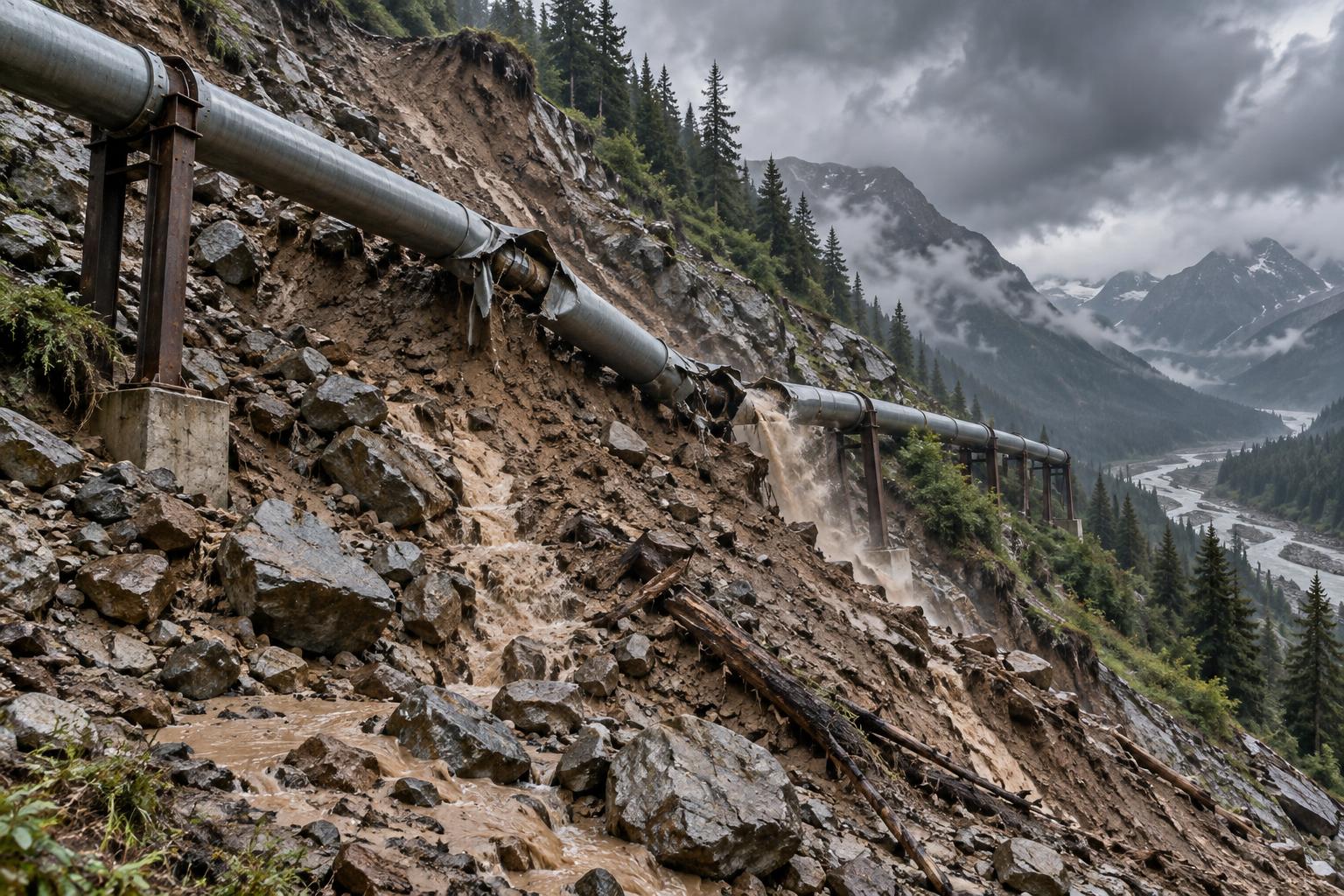
Across the four sectors, F.I.R.E. leads at 96 companies, followed by power generation at 90, coastal infrastructure at 79, and linear assets at 70. Linear assets being the thinnest is itself a signal: road, rail and pipeline carry enormous hydroclimatic exposure and the least dedicated technology built against it.
3. Analytics is crowded. We are bullish on the sensing layer.
Scoring against our Sense → Understand → Act stack: 127 of 159 companies operate in the Understand layer — analytics, modeling, decision support. Only 65 operate in Sense, the observation and data-collection layer. Ninety-four are Understand-only, building models on data somebody else collects.
Our own pipeline reflects that skew, and so does most of what we see. That is a fact about supply, not a preference. Analytics is where capital has gone because analytics is where software margins are — but every model in the Understand layer competes on the same public inputs: the same satellites, the same gauge networks, the same reanalysis products. Differentiation collapses toward the modeling team, and modeling teams are hireable.
Proprietary observation is the scarcer asset, and it is the input the Understand layer will eventually have to buy. We are deliberately working the sourcing effort upstream toward Sense — instruments in the water, on the embankment, on the seawall — and we expect the Sense share of our own portfolio to rise from here. If you are building at that layer, or you see something there, we want the introduction.
4. A quarter of the universe never raised venture capital
Forty-two of 159 companies — 26% — are bootstrapped, strategically funded, or grant-funded, with no venture round on record. In most emerging categories that would read as weakness. Here it reads as demand.
These are businesses that reached sustainability by selling to buyers who had no choice. A port authority renewing a monitoring contract, a reinsurer paying for a hazard feed, a DOT funding scour instrumentation out of maintenance budget — that revenue arrives whether or not a venture market exists. It is the clearest available evidence that the compelled buyer is real rather than theoretical.
It also creates a specific sourcing edge. Companies that never needed venture capital are not on anyone else’s screen, do not appear in deal databases, and are frequently reachable before a competitive process forms.
5. This is not a US story
Eighty companies sit in North America and 59 in Europe and Israel, with the balance across ANZ and the rest of the world — 27 countries in total. The near-even split matters because it tracks where the forcing functions are, not where the venture capital is. IFRS S2 adoption, EU infrastructure climate-assessment mandates, and national flood directives have produced a European cohort roughly as large as the American one, at earlier stages and lower entry valuations.
A US-only adaptation fund is looking at half the category.
6. What a generalist sees, and what we see
A generalist climate fund screening this same universe would reach different conclusions, for structural reasons rather than careless ones. It would find the companies with water words in their names and miss the other three quarters. It would read the vocabulary fragmentation as a sign the category is not real. It would skip the bootstrapped and strategically funded cohort entirely, because those companies never enter a deal database. And it would treat a company that sells to insurers, ports, and utilities at once as unfocused rather than as evidence that the hazard travels.
None of that is a criticism. It is what happens when the frame is broad enough to cover twelve hazards: you screen on founder and market size, because you cannot hold a buyer-level model of every one. Our frame is narrow on purpose. We hold one hazard, four sectors, and a single test — who is compelled to pay — which is why we can spend our judgment on the question that decides the outcome.
What we do with this
The census is a method, not a marketing exercise. Every company that enters the pipeline is scored on three checks — buyer economics, forcing function, and endorsement network — and the tier follows from the answers rather than from enthusiasm. A company can have excellent technology, an excellent founder, and a genuine water problem, and still fail all three. Many do.
We publish the distribution because it is falsifiable. If the compelled-buyer thesis is wrong, it will show up here first: the Tier A share will erode, the bootstrapped cohort will stop growing, the buyers will drift back toward utilities and sustainability budgets. We would rather be measured against a number we published than a story we told.
And we publish it because defining a category is a claim you have to keep earning. We intend to run this annually. What changes year over year — how the vocabulary consolidates, whether the Sense layer thickens, where the European cohort clusters — will be a more honest indicator of whether hydroclimatic risk is becoming a category than anything we could assert about it.
Method note
The pipeline is a live working file, refreshed continuously; figures are as of September 2026. Companies are sourced from inbound introductions, syndicate partners, accelerator cohorts, sector conferences outside the water circuit, and direct research. Tier A denotes high conviction against all three checks; Tier B, actionable with an open question; Tier C, tracked for landscape purposes. Sector and stack scores are assigned by us and are judgments, not disclosures. Counts include portfolio companies and companies we have passed on.
Investing in what water threatens?
Mazarine Climate backs the companies that turn hydroclimatic risk into priced, asset-level decisions. Read our thesis, explore our sectors, or reach out.