Hydroclimatic Risk Has Always Been the Insurance Claim
Insurance and credit are the densest corners of our thesis: the buyers are most compelled, the data gap is most expensive, and the technology has changed most recently.
Six companies at the intersection of insurance, credit, hydroclimatic risk, and technology. We may not invest in any of them, or in all of them — they are representative of the opportunities we look at at Mazarine Climate.
Recent diligence on Sereno — a portfolio company writing parametric cover that pays on measured hazard rather than adjusted loss — sent us back through the claims data and the vendors behind it.
Insurance and credit are the densest corners of our thesis. In insurance, carriers are compelled by non-renewal and basis risk. In credit, lenders are compelled by hidden climate exposure in their borrower books — hazards flow to EBIT erosion, debt service capacity, and ratings. In both cases, the gap is observation, not modelling.
One definition, because the vocabulary does real work. Hydroclimatic risk is the financial and operational risk that climate-driven precipitation extremes — too much, too little, too dirty, too unpredictable — impose on assets and balance sheets. It is not the business of water and wastewater utilities. It names a hazard and the party who bears the loss: a port, a lender, a highway authority, a carrier.
I. The oldest claim in the book
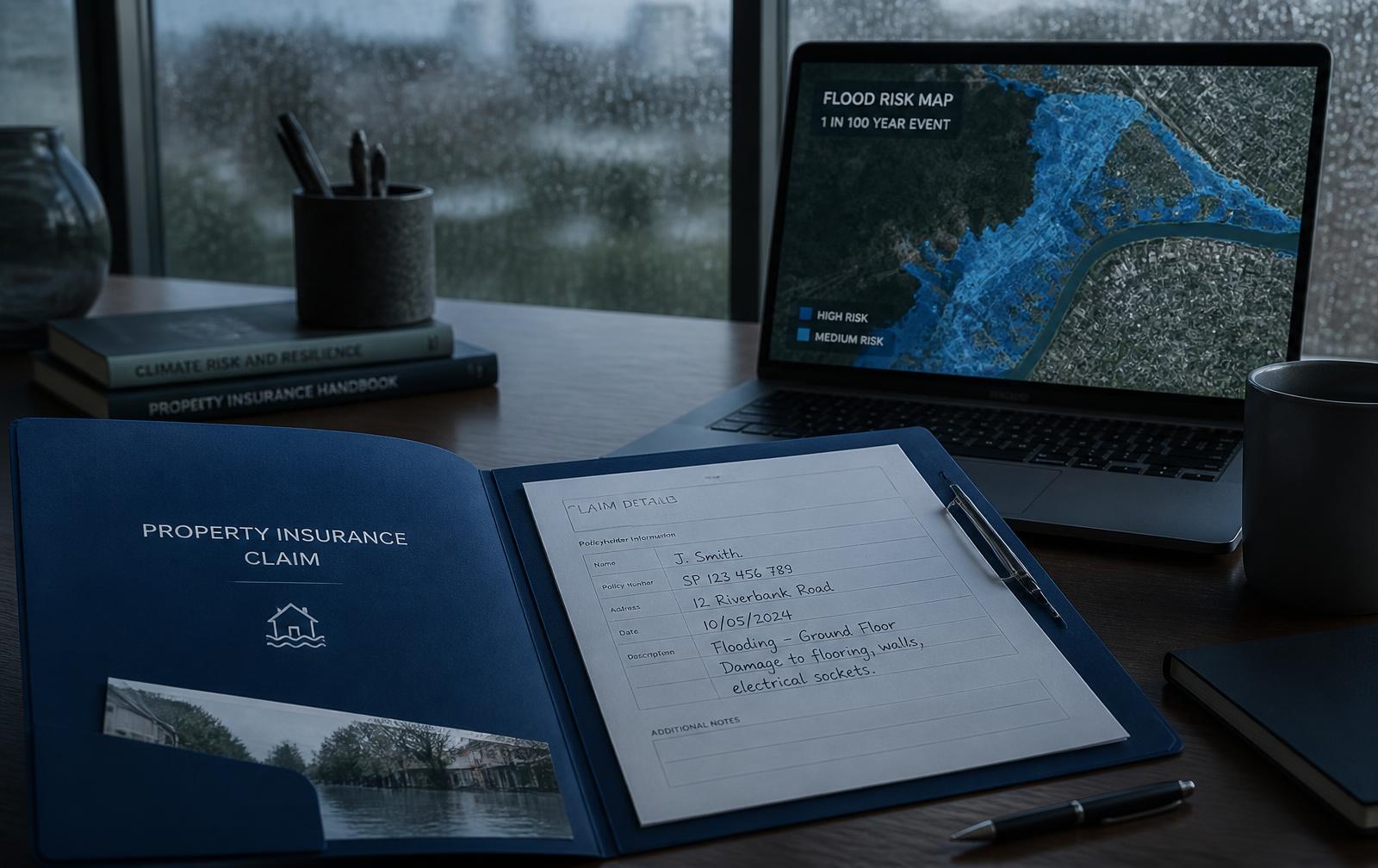
Property insurance is, in the public imagination, fire insurance. The loss data has never agreed. Triple-I, working from ISO figures, puts roughly one in sixty insured US homes filing a water damage or freezing claim each year, against one in 425 for fire and lightning and one in 700 for theft.
Much of that history is plumbing failure rather than climate. But it establishes what carriers know and outsiders miss: this is the peril that empties the reserve. The precipitation-driven share is the part growing fastest — and the part that was, until recently, impossible to measure at the asset.
II. Far wider than flood — and none of it belongs to water and wastewater utilities
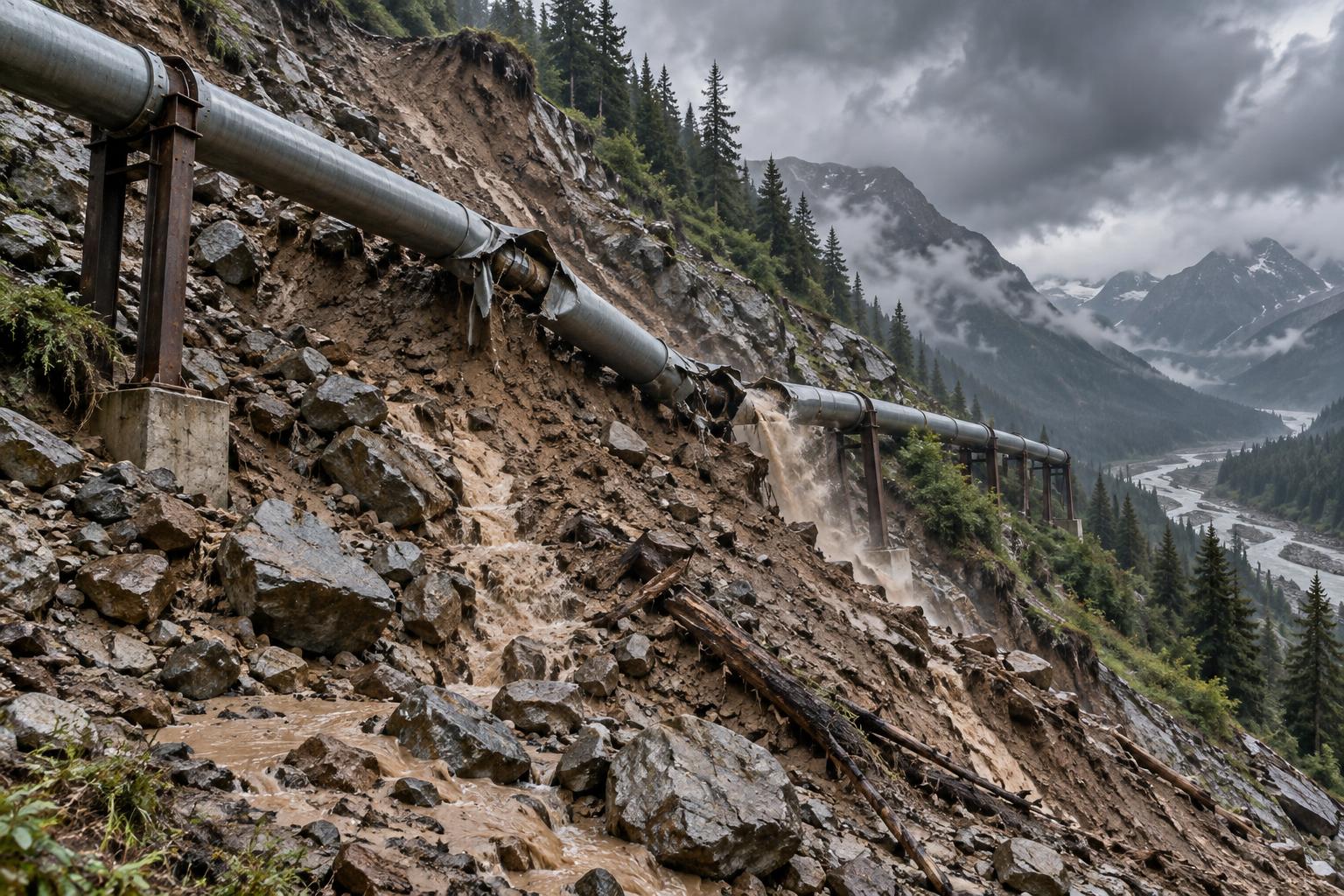
Sort the hydroclimatic perils an underwriter actually carries and they fall into five groups. Too much: pluvial and river flooding, storm surge, hail, snow load, and the debris flows that follow a burn scar. Too little: drought-driven subsidence, low river levels halting barge traffic, thermal plants curtailed when cooling runs short. Too cold: freeze-thaw and burst losses, the largest frequency driver in the homeowner book. Too dirty: blooms and contamination events that shut a facility or trigger liability. Too unpredictable: the variance itself — basis risk in parametric structures, reserve volatility everywhere else.
Notice who is not on that list. None of it belongs to water and wastewater utilities. It is a rail operator's washout, a port's downtime, a lender's collateral, a REIT's non-renewal, a farmer's yield — headaches carried by every industry except the one built to handle the resource. The moment a loss lands on a balance sheet that did not choose it, you are in insurance and credit.
III. Compelled on both sides of the policy — and on the loan
Asset owners feel it first not as a storm but as a renewal. Separate deductibles for this peril alone. Sublimits. Flood endorsements priced off maps drawn for a different climate. Capacity withdrawn while the broker calls it a hard market. MSCI tracks insurance as a share of commercial real estate income receivable doubling in five years, to 2.4% nationally and above 4% in exposed metros.
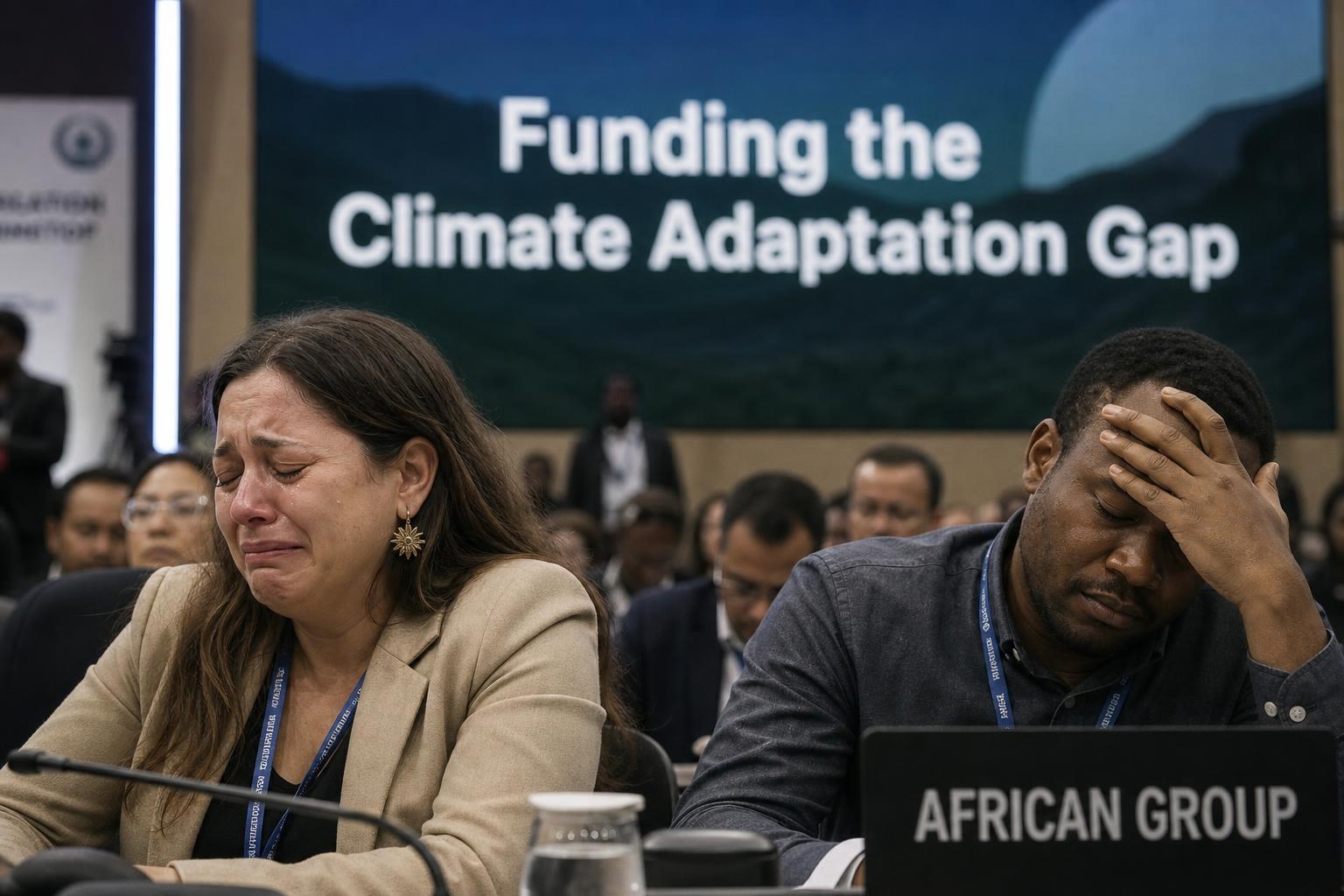
The protection gap is the other half: $181B in 2024, barely 43% of economic losses insured. That is not a moral failure. It is an information failure. Carriers do not decline risk they can see and price; they decline risk they cannot.
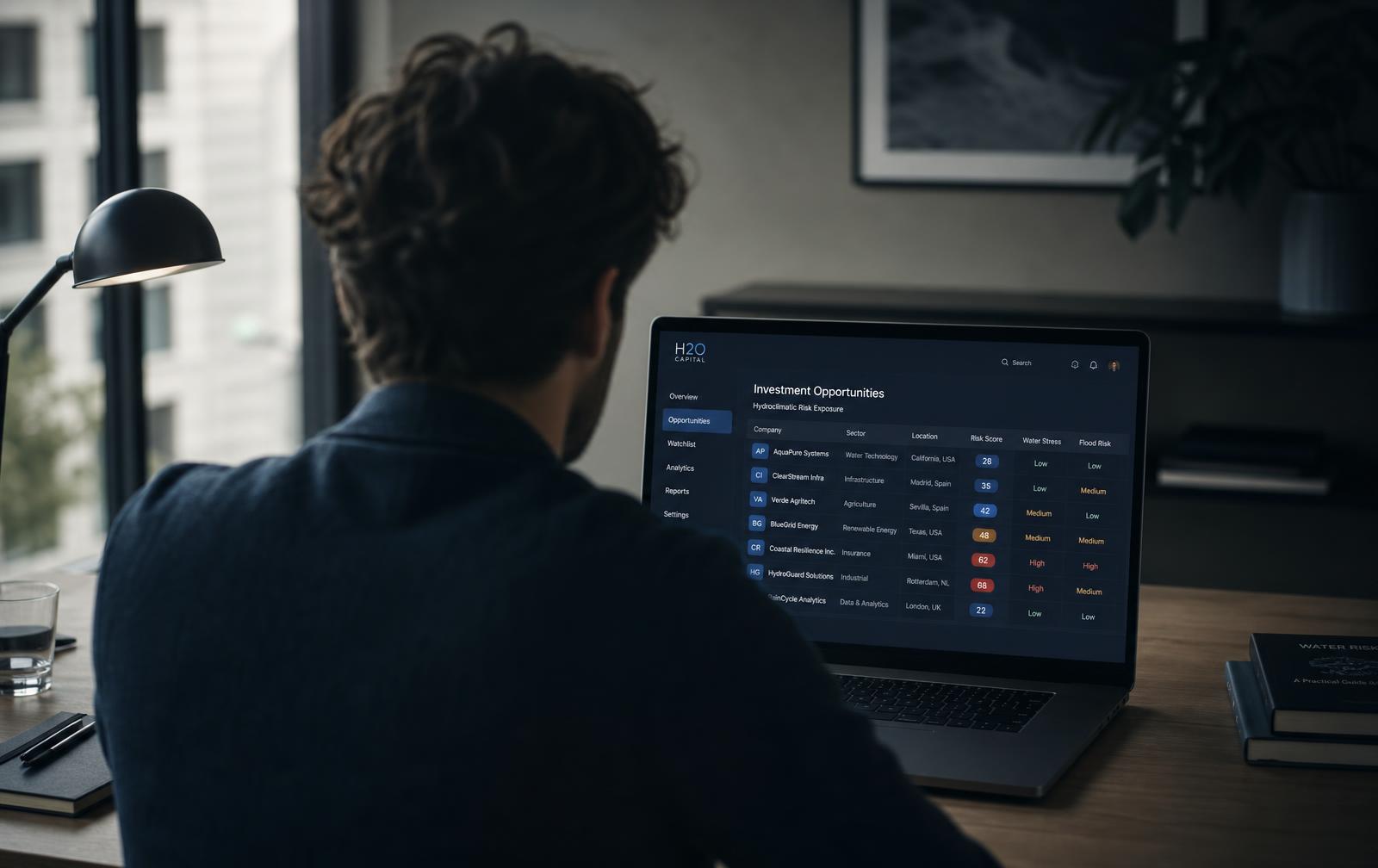
Credit runs the same logic one step back. A lender's book carries hidden climate exposure that flows straight to debt service capacity. Most lenders already have hazard models; what they lack is asset-level identification of where their borrowers actually sit. Know where a borrower's plant is and what precipitation extremes it faces, and you can have a substantive conversation about adaptation spend and debt service. We fund the observation layer that makes that conversation possible, and it flows on into credit pricing and adaptation finance.
IV. What changed, and why no data will soon mean no cover
Why now: the capability did not exist a decade ago. Satellite constellations moved to daily observation at ten metres and better, InSAR added millimetric ground movement, in-situ sensing collapsed in cost, and geospatial AI made it tractable to fuse those layers and answer at a single asset rather than a portfolio average. Hazard, exposure, and vulnerability are newly observable at the asset — not a better modelling pipeline, a different input.
"Uninsurable is unfinanceable" has been said enough times to stop meaning anything. This version has not:
An asset with no data on it is on its way to being uninsurable — and unlendable.
Underwriters price uncertainty conservatively. Where they cannot see, they assume the worst case, load the premium, or decline. As the market divides into assets that can produce continuous evidence of their exposure and assets that cannot, the second group does not pay more. It gets non-renewed, or repriced at the credit committee. Absence of data becomes an underwriting input in its own right.
V. Resolution is the constraint — and measurement is not the point
The reflex is to invest in the model. We think models are the commoditising layer: the strong platforms are converging in method, and AI is compressing the cost of the next one. What does not commoditise is the observation underneath. Two firms running comparable methods on different data produce different answers, and the one with higher spatial and temporal resolution is right more often.
Eoin Murray's line puts it well: nothing on a balance sheet is priced at the global mean. Parametric makes it unarguable — basis risk is a resolution problem and nothing else. A gauge twenty kilometres away pays when it should not and fails when it should.
But resolution is a means. Measurement is not the goal; decision-making is. Visualise the exposure, understand it, act on it — and only the third step is what an underwriter or a credit committee will pay for.
Six companies we are eyeing for possible investment
All are early and held in confidence, so we give only country and activity. Each works exclusively in insurance or is building toward it.
United Kingdom. Helping coastal property and infrastructure owners price their exposure — geospatial AI over satellite, LiDAR, and in-situ observation at ten-metre resolution, so an underwriter can rate a single asset and credit its defences.
United States. Supporting insurers, coastal engineers, and port operators with the data infrastructure beneath their decisions — standardising incompatible sensor streams into one decision-ready layer. Attacks interoperability, not the model.
United States. Arming carriers and lenders with physics-based flood simulation — pluvial, fluvial, coastal, and groundwater modelled together at sub-metre resolution, with impairment cascaded across dependent assets.
Switzerland. Equipping asset-heavy industrials to lower their own cost of cover through AI risk intelligence. The buyer is the insured, not the carrier — proof the compulsion runs from both sides of the policy.
Netherlands. Helping underwriters set defensible parametric triggers — deriving the basin rainfall that floods a specific parcel, then monitoring forecasts against that threshold a week ahead at sub-ten-square-metre resolution.
Canada. Supporting linear-asset operators with seven days of warning on extreme precipitation and snowmelt at a named location, snowpack and burn scars folded into the signal. The underwriting motion is what they are building toward.
These six are a sample. Mazarine Climate tracks 159+ early-stage companies we classify as hydroclimatic risk.
Where we land
We are as bullish on this realm as on anything in the portfolio, and we are actively looking. The peril is the oldest in property insurance and has never stopped being the largest. It reaches far past flood, and none of it is a water or wastewater utility's to carry. Buyers are compelled on both sides of the policy and again at the credit committee. The scarce asset is not the model — it is the resolution of what feeds it, and the decision it enables.
We may not invest in any of these six, or in all of them. They are representative of what we look at, and of where the next decade of hydroclimatic risk underwriting gets built. If you are building here, we would like to hear from you.
Mazarine Climate · mazarineclimate.com
Sources
Insurance Information Institute, calculations based on ISO data — homeowners claim frequency by peril. Zurich North America — leading cause of commercial property loss (2021); 57% of claims processed. MSCI, "Insurance Has Bigger Bite of Commercial-Property Income," Q3 2024. Swiss Re Institute, sigma — protection gap, $181B (2024), 43% insured share.
Investing at the intersection of water risk and insurance?
Mazarine Climate backs companies that turn hydroclimatic exposure into priced, asset-level decisions. Read our thesis, explore our sectors, or get in touch.