Mazarine Climate
Investment Thesis

We invest in the AI-native data stack for hydroclimatic risk.

Mazarine Climate is a specialist VC on the adaptation side of climate-tech. We focus exclusively on hydroclimatic risk — floods, droughts, storms, sea-level rise, and the cascading hazards they trigger — and back early-stage companies serving the four sectors absorbing the most pain and spending the most to manage it: Linear Assets, Coastal Infrastructure, F.I.RE. (Finance, Insurance, Real Estate), and Power Generation. Our lens is AI applied to the Industry 4.0 toolbox: the sensors and monitoring networks that produce high-resolution ground-truth data, and the AI, digital twins, and decision software that consume it. Effective AI is built on better data — we back founders on both sides of that equation.

01

Risk is repricing in real time, and balance sheets aren't ready.

Hydroclimatic risk — floods, droughts, storms, and sea-level rise — is repricing assets in real time. Insurers are withdrawing from flood- and storm-exposed markets. Sovereigns and municipalities are issuing debt conditioned on water and coastal risk. Operators are losing production to droughts that empty reservoirs, floods that close ports and rail, and storm surge that strands coastal capex — on timelines 20th-century hydrology said were decades away.

The repricing has begun. The instrumentation priced to it hasn't. That asymmetry — between how fast hydroclimatic risk is moving and how slowly the data, models, and software underneath it are catching up — is where outsized returns and outsized impact live together.

02

Data is the unlock — and AI finally makes it tractable.

For the first time, satellite cadence, sensor cost, and model capability are all converging. A pipeline corridor, a coastal port, a property portfolio, or a hydroelectric reservoir can now be observed continuously and reasoned about probabilistically.

We back companies turning that capability into products operators, insurers, and regulators actually buy.

03

Adaptation is where forward-thinking climate capital is going.

The most sophisticated climate money is no longer concentrated in mitigation alone. Sovereign wealth funds, reinsurers, infrastructure investors, and a new generation of specialist venture firms are moving decisively into adaptation — because that is where the spending is already happening and where the risk is already being priced.

Mitigation remains necessary. Adaptation is now inevitable, and it is compounding faster. The capex required to harden infrastructure, redesign supply chains, and rebuild risk models is measured in trillions — and the buyers (insurers, operators, lenders, regulators) are procuring today, not waiting on policy.

Software, sensing, and intelligence will capture a structural share of that flow. That is the market forward-thinking climate capital is pursuing, and the market Mazarine Climate is built for.

04

The part of water risk that actually trades.

The 'too much water' problem — sea level rise, storm surge, and extreme precipitation — is often more immediately destructive than scarcity because it is acute, infrastructure-damaging, and system-wide. Excess water events rapidly overwhelm design thresholds, causing floods, slope failures, and cascading disruption across transport, utilities, and urban systems. These failures are sudden, visible, and increasingly translate into insurable and investable risk.

Water scarcity is a major global challenge, but it is harder to invest in at scale. Solutions like desalination, reuse, and distribution sit within complex regulatory, political, and often human-rights constrained environments, which slows deployment and limits scalability. As a result, water quality and excess-water risk tend to offer clearer commercial pathways. The key exception is scarcity tied to power generation (hydro and thermoelectric), where reliability directly drives infrastructure demand. This framing underpins Mazarine Climate's thesis and prioritization.

The academic case

The science behind the thesis.

Our conviction that hydroclimatic risk is the defining investable variable isn't a hunch — it tracks the peer-reviewed work of the MIT Joint Program on the Science and Policy of Global Change, one of the most authoritative voices in integrated climate and economic modelling.

MIT Joint Program · Report 350 · 2021

Hydroclimatic analysis of climate change risks to global corporate assets in support of deep-dive valuation

Strzepek, K., C.A. Schlosser & J. Goudreau — Joint Program Report Series, April 2021

The MIT team argues that investors, lenders, and insurers still lack quantitative tools to see which companies will endure climate change and which won't — and that hydroclimatic risk (flood and drought) is among the key climate-related risks to business. Using an ensemble of climate scenarios from the MIT Earth Systems Model combined with an enhanced version of the World Bank's Climate Risk Hydro Indicators, they assessed the real global facilities of an anonymous multinational ("GloCorp").

The findings are stark: by 2030, 61% of all facilities face Medium or High climate risk — rising to 90% by 2050. The instrumentation and data to price that risk barely exist today.

This is exactly the asymmetry Mazarine invests behind: hydroclimatic risk is repricing corporate assets in real time, the buyers (insurers, lenders, operators) need quantitative tools they don't yet have, and the AI-native data stack that supplies those tools is where we deploy capital. The MIT research is independent academic confirmation of our thesis.

Read the MIT report
Five families of climate risk

All are serious. One is already dominant.

Pyroclimatic, aeroclimatic, thermoclimatic, and bioclimatic risks are real, growing, and investable on their own timelines. Hydroclimatic risk is the family already driving the majority of today's insured losses, displacement, and stranded capex — and the instrumentation priced to that reality barely exists yet.

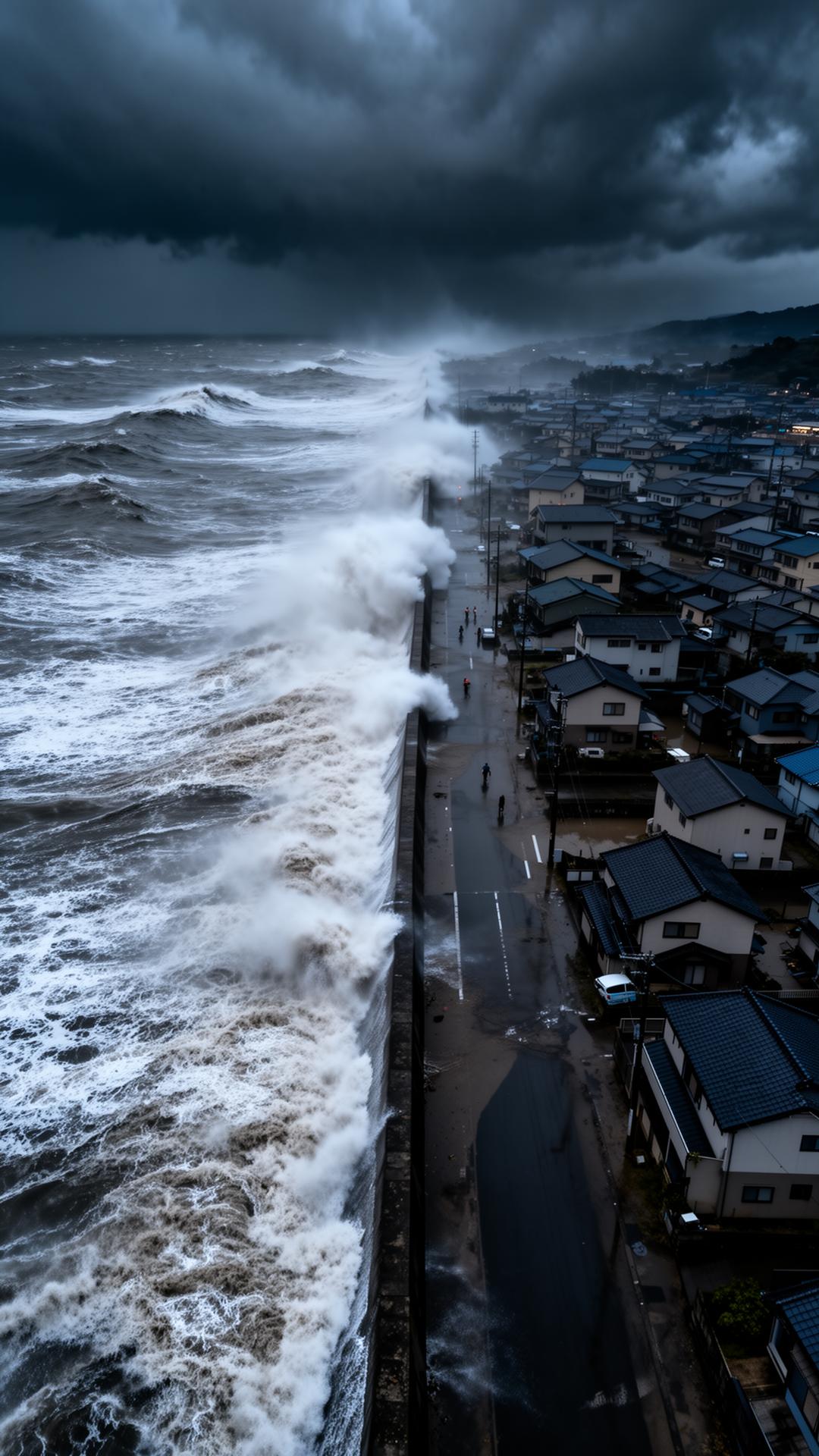
Storm surge breaking over a coastal seawall
Hydroclimatic
~85%
of insured nat-cat losses
$110B
est. annual global tech spend by 2030
Floods, droughts, storms, sea-level rise, cascading geohazards.
The dominant driver of climate loss today — and where we invest.
Specialist VC
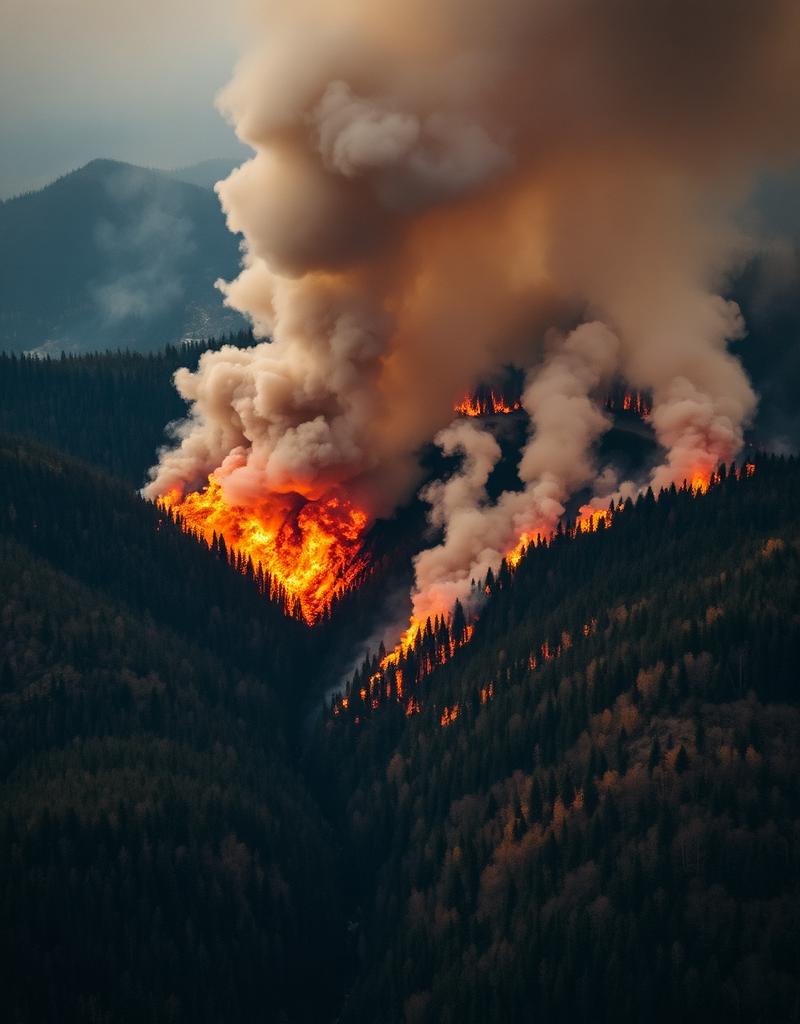
Aerial view of a wildfire burning through forested ridges
Pyroclimatic
~7%
of insured nat-cat losses
Wildfire, smoke plumes, post-fire debris flows.
Concentrated, accelerating, increasingly uninsurable in places.
Specialist VC
Empty city street shimmering in heatwave glare
Thermoclimatic
<3%
insured · large mortality cost
Heatwaves, cold snaps, labour and grid stress.
Human cost runs far ahead of insured loss.
Specialist VC
No specialist VCs
City skyline shrouded in thick smog
Aeroclimatic
<1%
insured · ~7M deaths/yr
Wind, storms, pressure systems, air quality, dust, particulate, atmospheric chemistry.
Health and productivity drag more than balance-sheet loss.
Specialist VC
No specialist VCs
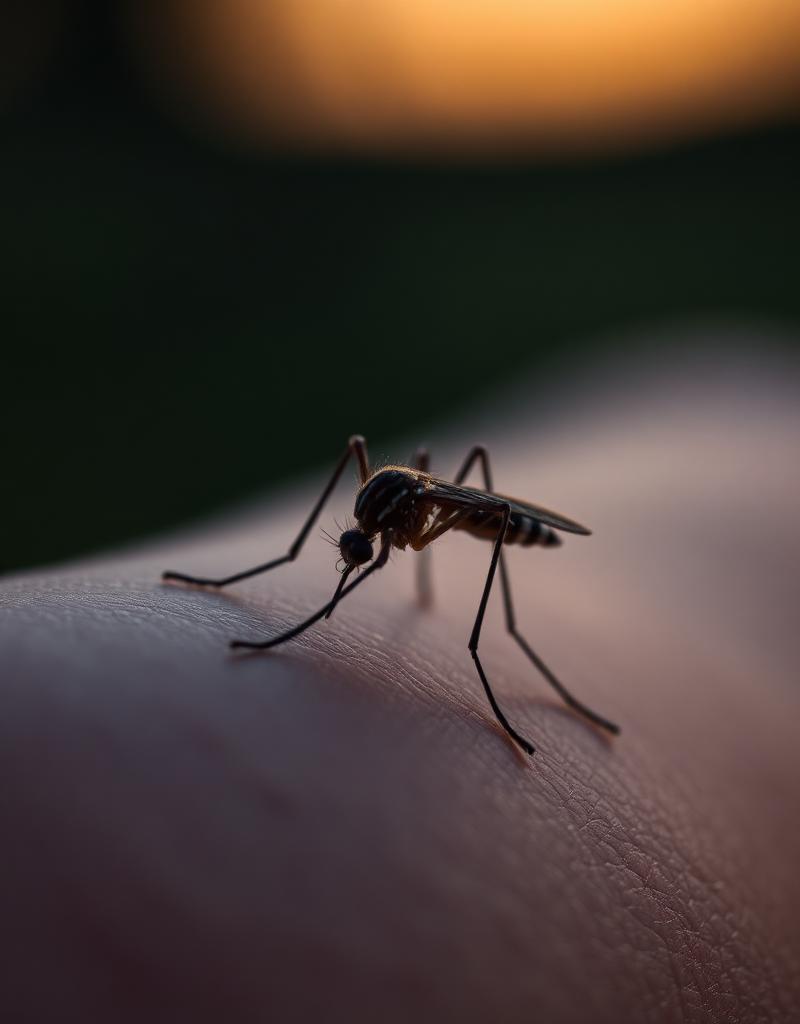
Macro photograph of a mosquito on human skin at dusk
Bioclimatic
<1%
modelled, not yet priced
Vector-borne disease, pathogen spread, ecosystem shift.
Long-tail, systemic, still pre-instrumentation.
Specialist VC
Generalist funds

Loss-share figures: Swiss Re sigma 1/2025 and Aon Climate & Catastrophe Insight 2025 (insured natural-catastrophe losses, 2020–2024 average). Thermo/aero/bio loss shares are small in insured terms but carry substantial mortality and productivity costs (Lancet Countdown 2024, WHO 2024).

Cross-cutting impact

These risks cut across every sector — and well beyond insured losses.

The five families don't sit neatly inside one industry. They surface simultaneously across finance, infrastructure, energy, agriculture, logistics, real estate, and the public sector — and they show up on dimensions that balance sheets alone don't capture.

Public health & safety

Heat mortality, water-borne disease, air-quality events, and emergency-response load on hospitals, utilities, and municipalities.

Economic development

Stranded capex, sovereign and municipal credit downgrades, repriced insurance, and rising cost of capital in exposed regions.

Business disruption

Supply-chain breaks, plant and grid outages, port and rail closures, agricultural yield shocks, and idled production.

Biodiversity & ecosystems

Habitat collapse, fishery and forestry decline, pollinator stress, and nature-related disclosure exposure under TNFD.

We are looking at 'water' less as a sector, and more as a risk factor. Contact us if you share this world view.
Contact us