Reframing Water

Why treating water as a risk factor — not a vertical — is the framing that lets a specialist fund actually see the opportunity.
Most people in finance, when they encounter anything water-related, reach for the same shorthand: the water sector, the water space, water deals, the water industry. It is easy. It is simple. It puts pipes, sensors, flood models, satellites, drought insurance, and desalination plants into one tidy bucket and lets the conversation move on. We understand the appeal. But a specialist fund is not in the business of easy and simple. We are in the business of clarity and conviction — and the sector framing delivers neither.
1. Sectors describe what things are. Risk factors describe what things do.
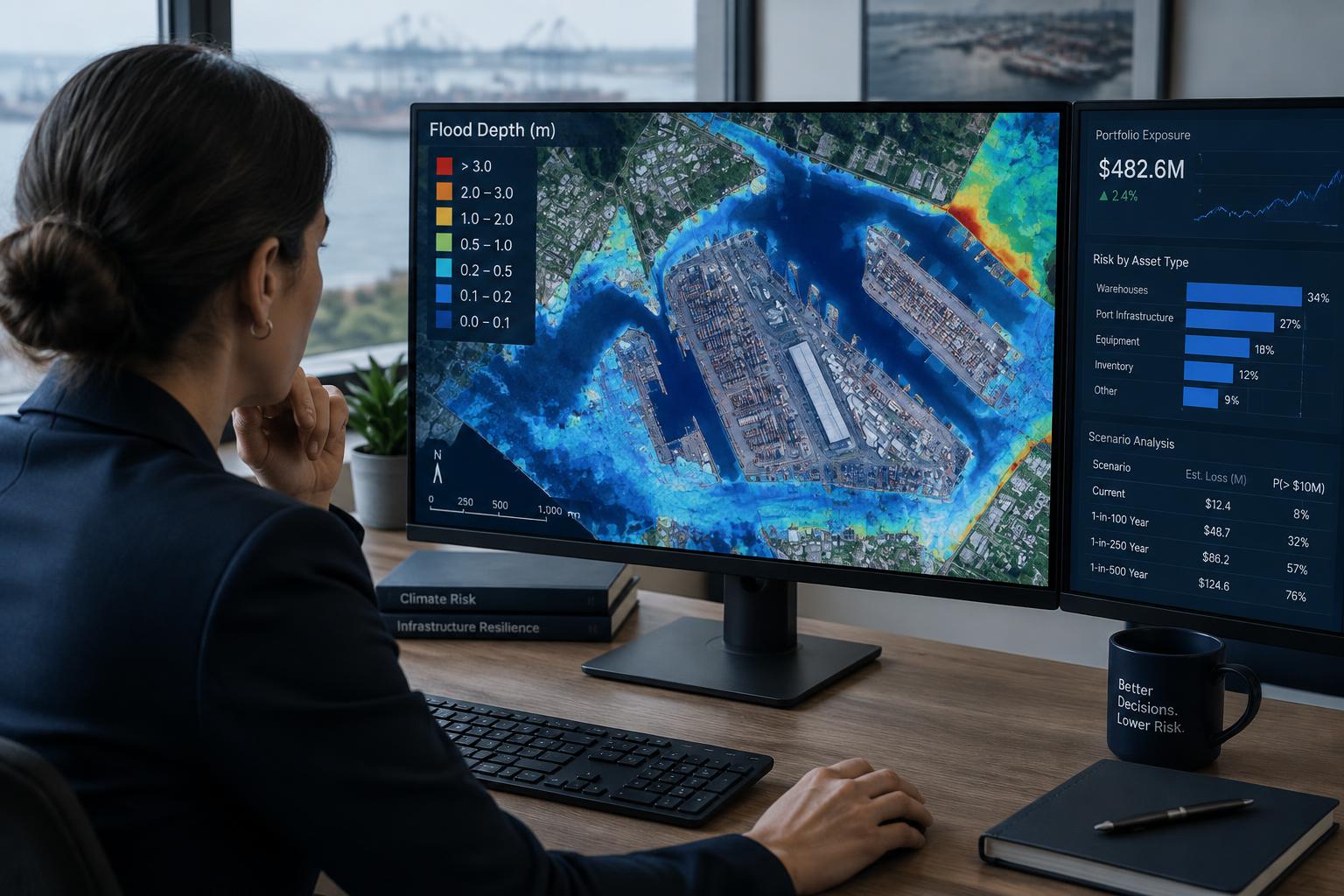
Semiconductors are a sector. Pharmaceuticals are a sector. Inflation, credit, duration, currency, and cyber are risk factors — pervasive forces that show up on every balance sheet and every P&L, but unevenly, and with radically different consequences depending on the asset. Nobody talks about the “inflation industry” or the “currency space.” Nobody pitches “cyber deals” as if cyber were a vertical the way semiconductors are. We treat those factors the way they actually behave: as cross-cutting transmission mechanisms whose financial effects have to be measured, priced, managed, and disclosed by every exposed party. Water belongs in that company. Too much of it floods a port. Too little of it idles a thermoelectric plant. Too dirty of it shuts a water intake. Too unpredictable of it breaks a twenty-year capex plan. The same molecule, sitting on different assets, produces different financial outcomes. Calling that a “sector” averages away the only information that matters.
2. The sector framing hides the customer.
Say “water sector” and the implied buyer is a municipal utility. That is a real industry — large, well-served by Xylem, Veolia, Suez, and Danaher, and well covered by infrastructure funds. It is not where venture-scale returns come from. Say “water as a risk factor” and a different customer reveals itself: the P&C insurer repricing flood exposure after a fifth consecutive year of secondary-peril losses, the bank stress-testing a commercial real estate book under IFRS S2, the port operator modelling sea-level rise into a twenty-year master plan, the independent power producer forecasting cooling-water availability for the 2030 dispatch curve, the railway authority instrumenting scour risk across thousands of bridges. These buyers have budget, regulatory pressure, and urgency. Most of them have never been called on by anyone selling “water.” They are the most underserved customer base in climate adaptation — and they are not the ones you reach by pitching the water industry.
3. The same word hides two different markets.
Water-utility spend grows roughly with GDP and population: single digits, regulated, capital-intensive, slow. Water-as-risk-factor spend grows with insured losses, disclosure mandates, and physical climate volatility — all compounding non-linearly. Our bottom-up build puts hydroclimatic risk technology at $45B in 2024 and $110B by 2030, a 16.5% CAGR, software-heavy, with non-discretionary demand drivers from ISSB IFRS S2, Basel Pillar 3, and a global insurance protection gap that hit $181B last year. The “water industry” framing averages a 3% market with a 16% market and reports an unexciting blended number. The risk-factor framing separates them — and reveals where the venture-investable opportunity actually sits.
None of this is a critique of the water industry as it has traditionally been understood. The utilities, the engineering firms, the strategics, the infrastructure funds — they are doing necessary work on the parts of the water challenge they were built to address. We are not them, and we are not trying to be. We have simply reframed the question to suit the kind of fund we are: a specialist backing early-stage companies where the most compelling financial and impact opportunities in water — broadly defined — actually sit. Those opportunities are not in the pipes. They are in the data, software, and analytics that let every water-exposed asset owner finally see, price, and act on the risk sitting on their books.
Water is not a sector. It is a factor. Once you see it that way, you cannot unsee it.