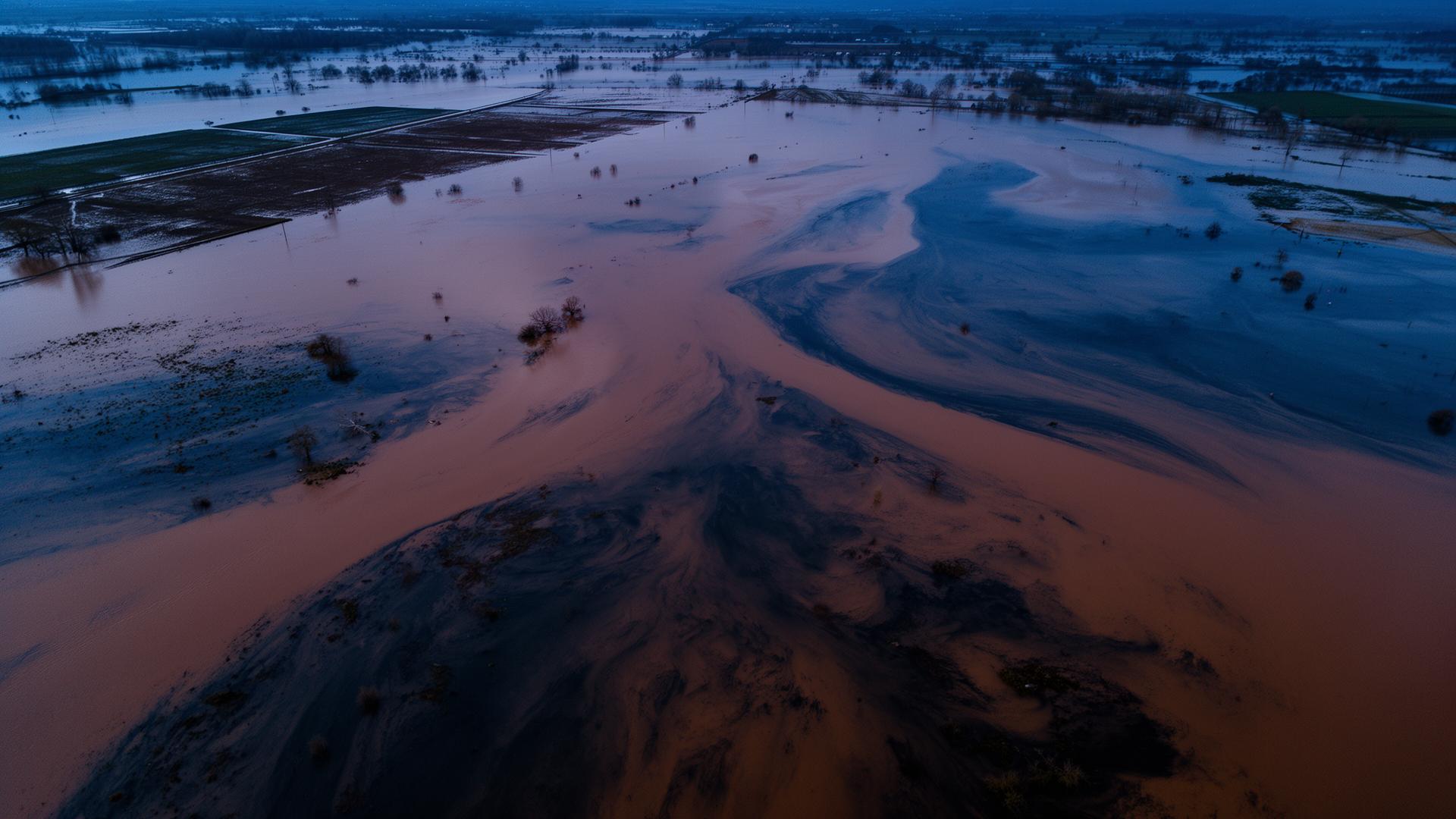
Hillsides on the Move
Why landslides, mudslides, and rockslides are climate change's most underpriced infrastructure risk — and a water risk the water industry doesn't see.
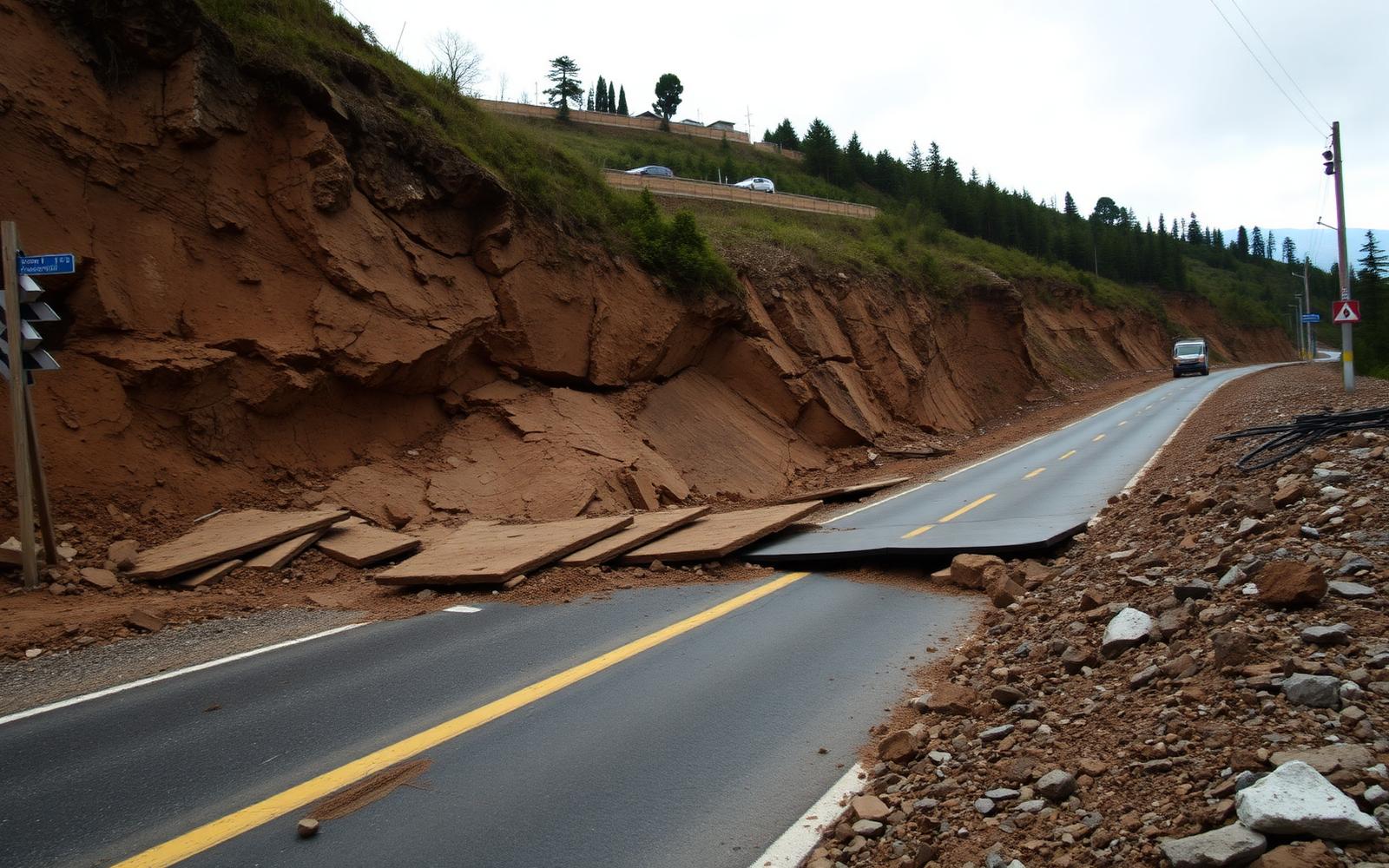
The defining image of climate-driven infrastructure failure is shifting. It's no longer just a flooded street or a coastal storm — it's a section of mountain highway sliding into a river canyon, a rail embankment collapsing under a saturated cut slope, a buried pipeline exposed by a debris flow that didn't exist a decade ago. Landslides, mudslides, rockslides, and debris flows are accelerating worldwide, and the trigger is almost always water. Heavier and more intense rainstorms drive water into the soil, raise pore pressure, lubricate ancient slip surfaces, and undercut the rock and till that hold slopes together. Freeze-thaw cycles widen fractures. Wildfires denude vegetation and turn the next storm into a slurry. The cause is hydrologic. The damage is geotechnical. And the asset class most exposed isn't a building or a city — it's the long, linear infrastructure that ties economies together. Three reasons this risk deserves its own thesis:
1. Water Risk, Outside the Water Industry
Slope failures are fundamentally water-driven events. Recent global research attributes the large majority of rainfall-induced railway disasters to debris flows, landslides, and compound hydro-geotechnical events — not to flooding in the traditional sense. The mechanism is well understood: extreme precipitation raises pore water pressure, reduces effective stress on slopes, and pushes marginally stable terrain past failure. But the water industry isn't set up to address it. Utilities focus on supply, treatment, and distribution. Stormwater engineering stops at the urban edge. Flood modeling stops at the floodplain. The risk that water poses to hillsides — and to everything built on, under, or beside them — falls into a gap between geotechnical engineering, transportation, and climate adaptation. That gap is the opening.
2. Linear Assets, Heterogeneous Risk, Mile by Mile
Roads, rail, transmission, and pipelines have a fundamentally different risk profile than buildings or campuses: the exposure changes every mile. A single corridor can cross a stable plain, a saturated cut slope, a fractured rock face, a burn scar, an old landslide complex, and a debris fan in the space of an afternoon's drive. One weak mile fails and the whole asset is offline — a 50-meter washout closes a 500-kilometer line. Global studies now project meaningful increases in landslide exposure for road and rail networks under realistic warming scenarios, with mountainous and coastal corridors carrying the largest delta. Pipelines face the same physics with an added consequence: a slope failure doesn't just close the asset, it can rupture it. The economic logic of linear infrastructure — long, thin, expensive, irreplaceable — concentrates climate-induced geohazard risk in exactly the assets that least tolerate it.
3. Underpriced, Under-monitored, Ready for a Platform
The data infrastructure to manage this risk is decades behind the physical exposure. Most linear-asset operators still rely on periodic visual inspection, legacy slope inventories, and reactive response after a storm. The technical building blocks of a modern approach — InSAR-based ground deformation monitoring, distributed fiber-optic and in-situ sensors on critical slopes, high-resolution precipitation and pore-pressure thresholds, and machine-learning models that translate weather forecasts into mile-by-mile failure probabilities — exist, but they are fragmented across geotechnical consultants, hardware vendors, satellite providers, and academic groups. No one is yet integrating them into a coherent risk product for owners, operators, insurers, and the AEC firms that advise them. As losses grow and regulators and underwriters sharpen their focus, the firm that builds that stack defines the category.
Slope failures aren't an exotic hazard. They're climate change expressed through geology — and one of the clearest places where a water-driven risk is hiding in plain sight, outside the industries built to manage water.