Lakes in Our New Climate Reality

Freshwater lakes are on the front lines of climate change — yet routinely overlooked by both the climate community and the so-called “water industry.”
Lakes are where climate change becomes visible. They warm faster than the air above them, absorb the brunt of every heavier downpour, integrate every change in their watershed, and respond on timescales humans actually notice — a single hot summer or one extreme storm can flip a lake's chemistry, ecology, and economic value. And yet lakes sit in an awkward gap: the “water industry” is largely organized around pipes, plants, and treated supply, while the climate community is largely organized around carbon, energy, and coastal exposure. Lakes — the most visible freshwater systems on the planet — are routinely overlooked by both. Three reasons that gap is the opportunity:
1. The Climate Signal Lands in Lakes First
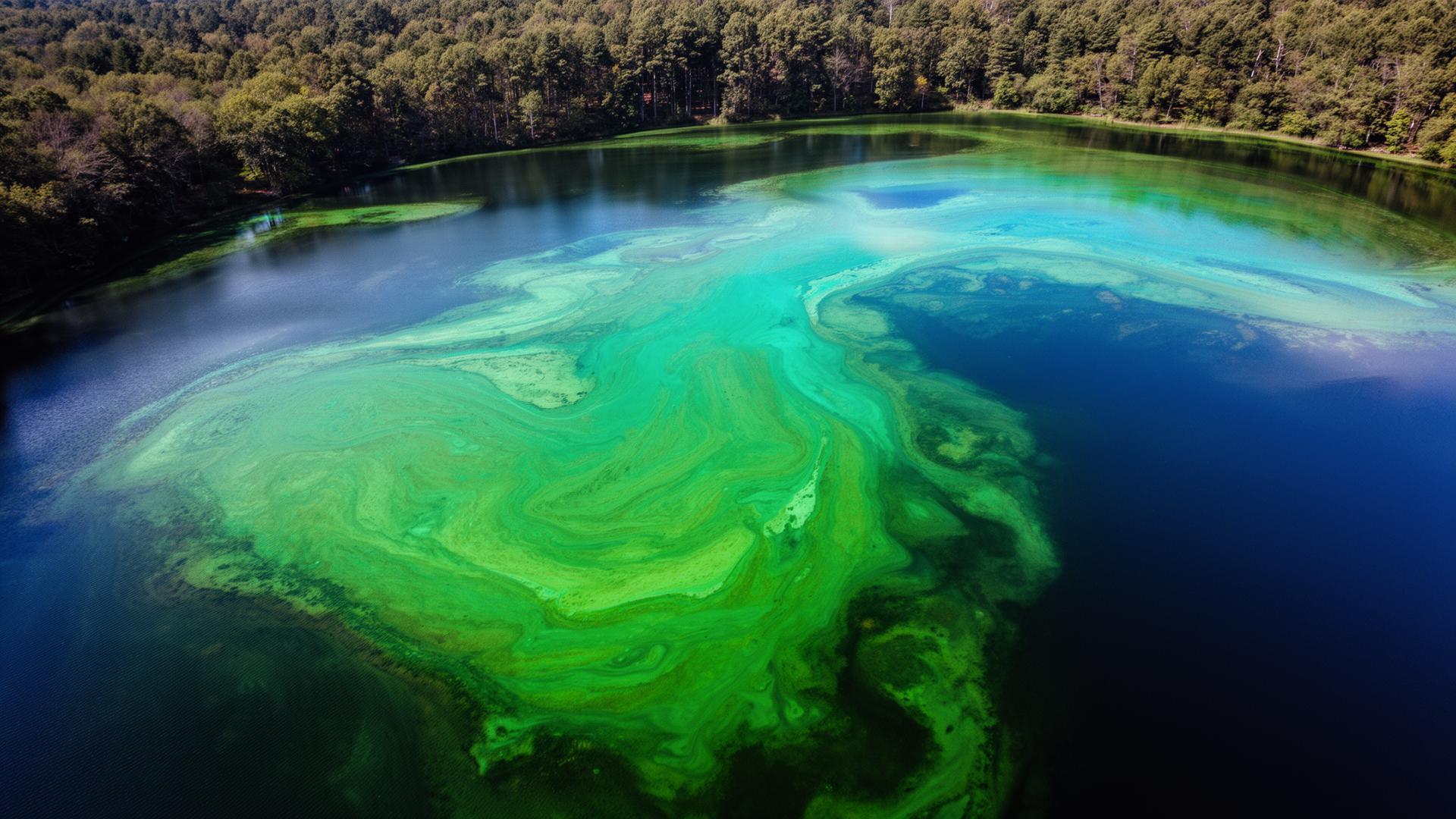
Lakes are integrators. Every degree of warming, every shifted precipitation pattern, every land-use change upstream eventually expresses itself in the water column. The science is now unambiguous: warmer summers extend thermal stratification and starve deep water of oxygen; warmer winters shorten or eliminate ice cover, scrambling the seasonal mixing lakes depend on; heavier rainstorms flush nitrogen and phosphorus off farms, lawns, and impervious surfaces in episodic pulses that overwhelm watersheds; and the droughts that follow concentrate those nutrients in stagnant, sun-warmed water. The result is a global increase in harmful algal blooms, hypoxic dead zones, fish kills, and beach closures — Lake Erie's recurring toxic blooms, Toledo's 2014 drinking-water shutdown, and the pet deaths now reported every summer from Georgia to Minnesota are not anomalies. They're the new baseline. Lakes are the place where climate, hydrology, agriculture, and ecology collide, and where the collision is measurable today.
2. A Massive Asset Class Without a Category
Lakes underwrite drinking water for hundreds of millions of people, billions of dollars in shoreline property values, regional tourism and recreation economies, commercial and sport fisheries, hydropower reservoirs, and the ecological integrity of nearly every major watershed. Yet they don't fit cleanly into the dominant industry categories. Water utilities focus on treated supply at the tap, not the lake upstream. Climate adaptation capital flows toward sea-level rise, wildfire, and grid resilience. Agricultural runoff is treated as a regulatory problem, not an asset-value problem. The economic exposure is enormous — property, tax base, public health, insurance, tourism — and it is materially under-monitored, under-modeled, and under-insured. When a category this large lacks a clear owner, the firms that step into the gap define it.
3. Aquatic Ecosystem Risk Is the Next Frontier
The investment case for lakes isn't conservation philanthropy — it's risk management for a warming climate. Continuous water-quality monitoring, watershed-scale nutrient modeling, satellite and in-situ bloom detection, predictive analytics for utilities and lakefront communities, and the data infrastructure to price aquatic ecosystem risk are all early-stage markets with accelerating demand. Regulators are tightening. Insurers are noticing. Municipalities are being forced to act when a bloom shuts down a drinking-water intake or a beach. We are bullish on aquatic ecosystem risk as a thematic area in our new climate reality, and lakes — visible, measurable, economically exposed, and chronically overlooked — are where that thesis is most concentrated.
Lakes aren't a side conversation in climate adaptation. They're the canary, the asset, and the opening — all at once.