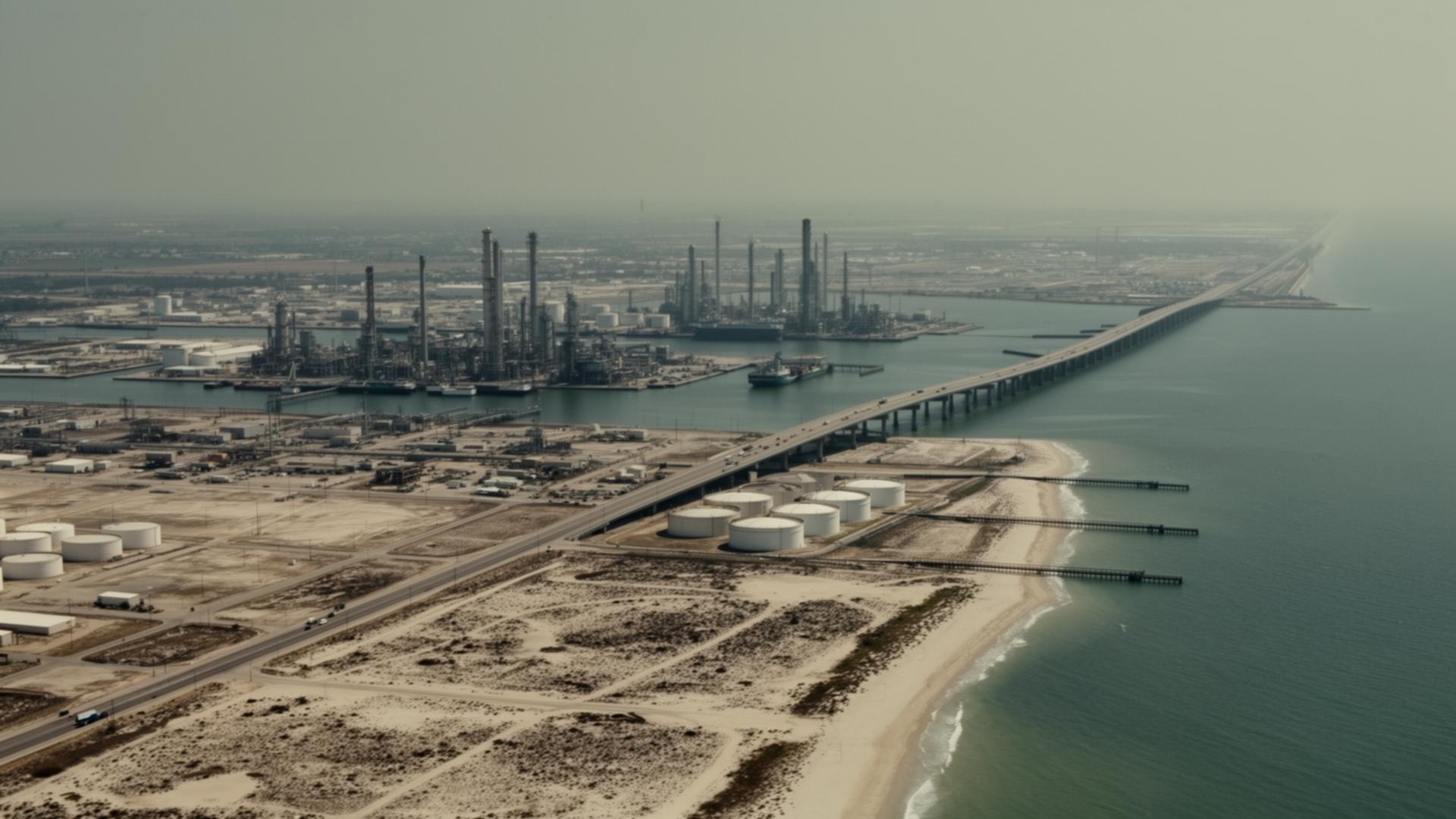
The Mirage of Water Scarcity as a Venture Opportunity

Water scarcity looks like the perfect investment thesis. Why the disciplined capital mostly steers clear — and where the real opportunity actually sits.
From the outside, water scarcity looks like the perfect investment thesis — perhaps the most obviously enormous one of our generation. The macro case writes itself: freshwater demand projected to outpace supply by 40% by 2030, six billion people in high-stress regions, the American Southwest drying out, and a U.S. city staring down a total outage. When a generalist investor sees a resource that is essential, finite, and getting scarcer, the conclusion feels inevitable — surely there is a fortune in solving this. And the underlying premise is correct. There genuinely will be parts of the world where water runs short, and that scarcity will create real, expensive, persistent headaches for agriculture, municipalities, semiconductors, power, and data centers operating in those basins. The mistake is not in seeing the problem. The mistake is assuming that a large problem is the same thing as a large investable opportunity. Investors who understand three structural realities — the politics, the conservatism of the operators, and the unforgiving economics of “new” water — mostly steer clear of scarcity, and they are right to.
The first reality is politics. Water is the most politically captured commodity on earth: priced below cost by design, regulated by bodies that answer to affordability mandates rather than returns, and delivered by natural monopolies whose rates are set by regulators steered to keep bills low. The 2024 Ofwat fines in the UK and the perennial debate over whether utility regulators are “really independent” are not anomalies — they are the operating system. You cannot build a venture-scale business selling into a market where the buyer’s price is a political decision. The second is the operators themselves. The water industry is deliberately, structurally conservative — not because incumbents are slow-witted, but because they master the most delicate system in the global economy, where the cost of a failed experiment is contaminated water. The first wave of water-tech VC learned this the hard way: most of it failed, not on technology, but on a sales cycle measured in regulatory approval years against a buyer with zero appetite for disruption. The third is the cost of new water. Desalination runs roughly $0.50–$2.50 per cubic meter and transport can double that; Corpus Christi rejected its desal plant at $1B precisely because the math doesn’t close. Atmospheric and other novel generation are worse. These costs are falling slowly and will remain prohibitive for general supply for a long time. Manufacturing water is a capital problem, not a software problem — exactly the profile venture should avoid.
Where Scarcity Is Investable — Narrowly
Within scarcity, the genuinely compelling plays are not about making water; they are about helping water-exposed enterprises avoid losing to its absence. The sharpest of these is power generation — thermoelectric and hydropower. These are private (or quasi-private), capitalized operators with an existential, non-discretionary need: roughly 91% of U.S. electricity comes from water-cooled thermoelectric plants, ~45% of China’s thermal generation sits in high-stress areas, and WWF projects the majority of large hydropower will face extreme drought or flood risk by 2050. When a plant curtails for lack of cooling water, the loss is measured in megawatts and millions — which means the operator will pay real, recurring money for hydrological forecasting, intake monitoring, and water-availability intelligence. The buyer is motivated, solvent, and not a municipality. The second tier is selling scarcity-management tools to the FIRE sector — finance, insurance, real estate. These players don’t need water; they need to price the risk of its absence into loans, premiums, and asset valuations, and they are now compelled to by ISSB/IFRS S2 disclosure and insurance repricing. That demand is software-margined, ARR-shaped, and funded from risk and compliance budgets rather than infrastructure budgets. Both plays share the same DNA: a private buyer, a hard ROI, and revenue that doesn’t depend on anyone actually solving scarcity.
The Counterintuitive Truth: The Real Opportunity Is Too Much Water
Here is the part the generalists almost never see. The most compelling opportunity in water is not on the scarcity side at all — it is on the excess side: flooding, storm surge, extreme precipitation, and the hydroclimatic volatility that produces too much water in the wrong place at the wrong time. The economics invert everything that makes scarcity hard. Where scarcity is slow, chronic, politically priced, and met with conservative public buyers, water excess is acute, event-driven, and lands on private balance sheets that feel the pain immediately and quantifiably. Secondary perils — overwhelmingly flood and storm — accounted for the vast majority of recent insured catastrophe losses, and the insurance protection gap on these events runs into the hundreds of billions. That gap is a screaming demand signal for exactly the venture-shaped products that scarcity lacks: flood and surge modeling, real-time event detection, parametric insurance that pays on a measured trigger, asset-level exposure analytics for linear and coastal infrastructure, and the satellite and sensor data layers that feed all of it. The buyers — insurers, banks, infrastructure operators, coastal asset owners — are compelled by both regulation and their own loss experience, they pay recurring software revenue, and the problem is getting structurally worse as 1-in-100-year sea levels become 1-in-10-year events. Too much water is the trade because the water industry’s three curses — politics, conservatism, and the cost of new supply — simply don’t apply to it.
We expect Main Street money to keep flowing toward “water” on the strength of the scarcity headline, armed with a genuinely naive read of the opportunity — chasing desalination cost curves and 40% supply-gap charts into the hardest, most politically captured, most capital-intensive corner of the category. The disciplined capital is positioned elsewhere: adjacent to the headline, one layer in, on the side of the problem where the buyer actually pays.
Water Is Life — and Other Weak Theses
It is worth naming the sentiment that powers most water investing, because it is everywhere and it is seductive. “Water is life.” “Water is our most precious resource.” “Water is the next oil; water is the future.” Every word of it is true — and almost none of it is an investment thesis. These are statements about importance, not about returns, and the two are not the same. A thing can be utterly essential to human survival and still be a terrible place to allocate venture or private-equity capital, precisely because its essential nature is what gets it priced below cost, politically protected, and walled off from the kind of pricing power that produces outsized returns. Importance and investability are not just different; for water they are frequently inversely correlated. Investors will keep pouring money toward scarcity anyway, because it feels right — it scratches the moral itch and the macro chart at the same time. But feeling right is not the same as being right, and the numbers tell a different story for capital allocated to scarcity than the headline promises.
And the “Biggest Environmental Challenge” Framing
There is a related conceit worth puncturing: the claim that water is the biggest environmental challenge of our time. Look at how water actually harms people and the framing collapses. People die from drinking contaminated water. People die from food shortages caused by the water that never arrived. People die in floods, in storm surge, in the wall of water that takes a town overnight. None of that is meaningfully “environmental” in the way the word is usually deployed — it is public health, it is food security, it is infrastructure, it is insurance, it is the economy. The overwhelming majority of the way industry and society actually experience water risk is social and economic, not ecological. That is not a semantic quibble; it is the entire reason the opportunity is mispriced. Capital keeps looking for water risk in the environmental aisle while the buyers who feel the pain — and pay to manage it — sit in finance, insurance, real estate, power, and infrastructure. To be clear: whatever thesis an investor lands on, scarcity or otherwise, we genuinely wish them the best of luck. The category needs capital, and conviction has a way of finding its own path.
Disagree? Let's debate it.
If this framing sharpened (or annoyed) you, take a look at how we think about it. Read our investment thesis and our sector focus, then reach out — we welcome a friendly debate.