
Mazarine Climate
All insights
Coastal Infrastructure

Our Focus in Coastal Infrastructure Monitoring Is Now a Higher Priority

June 2026 · 7 min read
Our Focus in Coastal Infrastructure Monitoring Is Now a Higher Priority

Two developments — the U.S. federal pullback and a call to “innovate or die” — turned a decades-old opportunity into a present priority.
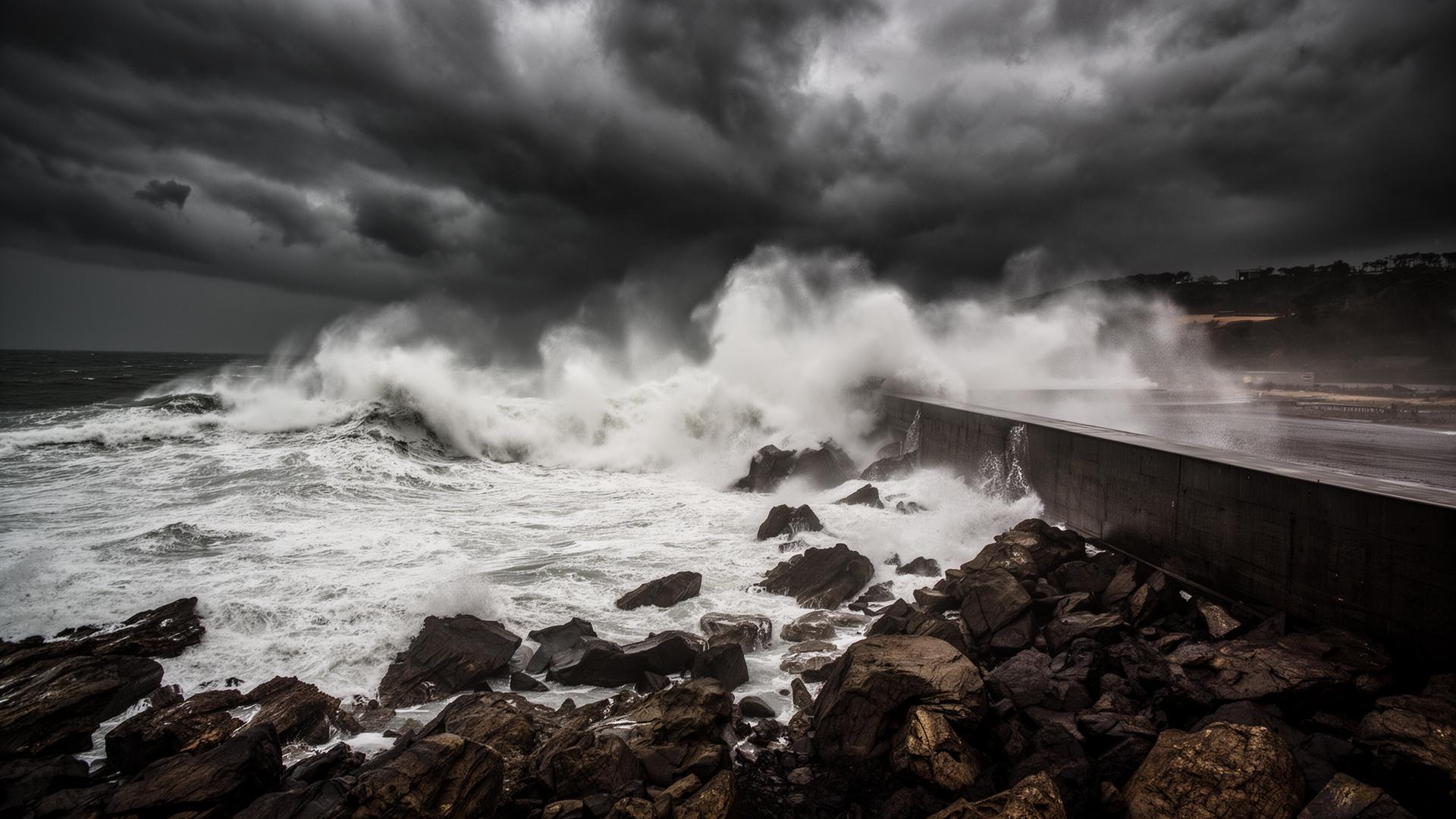
The two inflections that changed our priority

First, the U.S. federal government is stepping back. A federal ocean-observing network that took decades to build has been marked for removal, with in-water infrastructure across the Atlantic and Pacific slated to be pulled. For years, a subsidized public platform sat between the coastline and the private market, supplying a baseline of data that few commercial players could justify rebuilding. As that platform withdraws, the baseline goes with it — and the gap it leaves is precisely the kind of gap a private market forms to fill. Public retreat does not reduce the need for coastal data; it transfers that need to the asset owners who carry the risk on their balance sheets, and it does so at the moment the enabling technology has finally become cheap enough to serve them commercially.

Second, the science establishment itself is calling for exactly this. In her final State of the Science address, the president of the National Academy of Sciences — an ocean scientist by training — told the research community to innovate or die: cut administrative drag, lower the regulatory hurdles, and lean into AI to raise the rate of discovery. We read that not as a lament but as a signal from the top of the field that the legacy model — slow, capital-heavy, regulation-bound — has reached its limit, and that the agility the sector now needs is precisely what early-stage companies are built to supply. When the head of the NAS frames innovation as the baseline expectation rather than a lofty aspiration, she is, in effect, describing the investment thesis.

Neither development created the opportunity. Together, they reset its urgency. A decades-old market just lost its public anchor and gained the endorsement of its own scientific leadership for a faster, cheaper, more commercial model. That is an inflection worth acting on, and it is why coastal infrastructure monitoring has moved up our priority list.

Why the coastline specifically

Monitoring the deep, open ocean will always matter, and we do not pretend otherwise. But risk and capital are not evenly distributed. Where the ocean meets the land is where the hydroclimatic headaches of the coming decade concentrate — and where the assets exposed to them sit. The buyers line that edge: linear assets such as rail, road, and pipeline corridors exposed to surge and erosion; ports, harbors, and marinas managing inundation and sediment in real time; the enormous coastal exposure of the FIRE sector — the real estate, the loan books, the insured value in the surge zone; and coastal power generation managing intake and discharge against a changing sea.

None of these buyers was ever the customer for a research mooring in the deep Atlantic. All of them are customers for resolution at the shoreline, and all of them carry a balance-sheet reason to buy it that does not depend on a federal appropriation surviving the next budget. That is what makes the coastal monitoring industry investable rather than merely important.

Ten realms the coastal monitoring industry is building in now

Coastal monitoring is not a single product; it is a stack of distinct risk problems, each its own sensor-and-software business with its own buyers and economics. Founders are already raising and deploying against all of them. We organize the stack from the forces acting on the coast, to the ground giving way beneath it, to the consequences that reach the asset.

The forcing — what the water is doing

  • Tidal and ocean-current forecasting: Predicting tides, currents, and circulation at the shoreline, so operators know what the water will do hours and days out, not just what it did.

  • Storm-surge and coastal flood monitoring: Real-time water-level sensing and inundation prediction at asset resolution — the fastest-funded category, with low-cost sensor networks and satellite radar now displacing sparse legacy gauges.

  • Wave and sea-state intelligence: Wave height, energy, and run-up measurement for ports, offshore assets, and coastal defenses — the difference between a safe berth and a damaged one.

The ground — what the coast itself is doing

  • Coastal subsidence and land-motion monitoring: Satellite InSAR and in-situ sensing of the land sinking beneath coastal assets — the silent multiplier that makes every centimeter of sea-level rise worse, and that few asset owners are tracking.

  • Shoreline change and coastal erosion mapping: Quantifying how fast the coastline is advancing or retreating, the front-line metric for real estate, infrastructure siting, and adaptation-project monitoring.

  • Sedimentation and sediment-transport monitoring: Tracking where the ocean is moving sediment — silting up channels and harbors, undermining foundations — the data behind dredging spend and asset-condition assessment.

The water quality — what is in the water

  • Nutrient and harmful algal bloom monitoring: Early-warning detection of blooms and nutrient loading that threaten power-plant intakes, aquaculture, tourism economies, and coastal water users.

  • Saltwater intrusion and water-quality sensing: Monitoring the landward creep of saltwater into freshwater systems and infrastructure — a slow, expensive, balance-sheet risk for coastal utilities, agriculture, and industry.

The consequence — what reaches the asset

  • Asset-level structural and scour monitoring: Instrumenting bridges, seawalls, docks, and foundations to catch scour and structural stress before failure — maintenance-cost avoidance with a hard ROI.

  • Coastal risk analytics and digital twins: The software layer that fuses all of the above with historical records and AI to produce asset-specific, financially legible risk — the highest-margin, fastest-growing tier of the stack, and where venture returns concentrate.

Each realm faces a different hydroclimatic headache and serves a different buyer, but they share the one trait that makes the category investable: the customer is compelled to buy, not inspired to.

Where we go from here

We do not view this as a contraction to mourn. We view it as the founding condition for a market — a decades-old opportunity given new urgency by a public-sector retreat and a clear call, from the field’s own leadership, to build something faster and cheaper. The ocean does not stop changing because the funding did, and the assets standing in its way do not stop needing to be managed. Across all ten realms, the same pattern holds: a real and worsening hydroclimatic headache, a buyer compelled to price it, and technology finally cheap enough to serve them at scale.

This is where Mazarine Climate is leaning in, and it is a category we expect to build alongside others. We are actively interested in syndicating with co-investors — venture and private equity alike — who see the same inflection and want to underwrite the coastal monitoring industry with the rigor it now deserves. The decade ahead belongs to the founders who understand both the water and the buyer. We intend to back them, and we would welcome the right partners in doing so.

Mazarine Climate is an investor in AquaMetrics and Bluesonde.

Building or investing in coastal monitoring?

We are actively deploying into the coastal infrastructure monitoring stack and welcome co-investors who see the same inflection. Read our thesis and sector focus, then reach out.