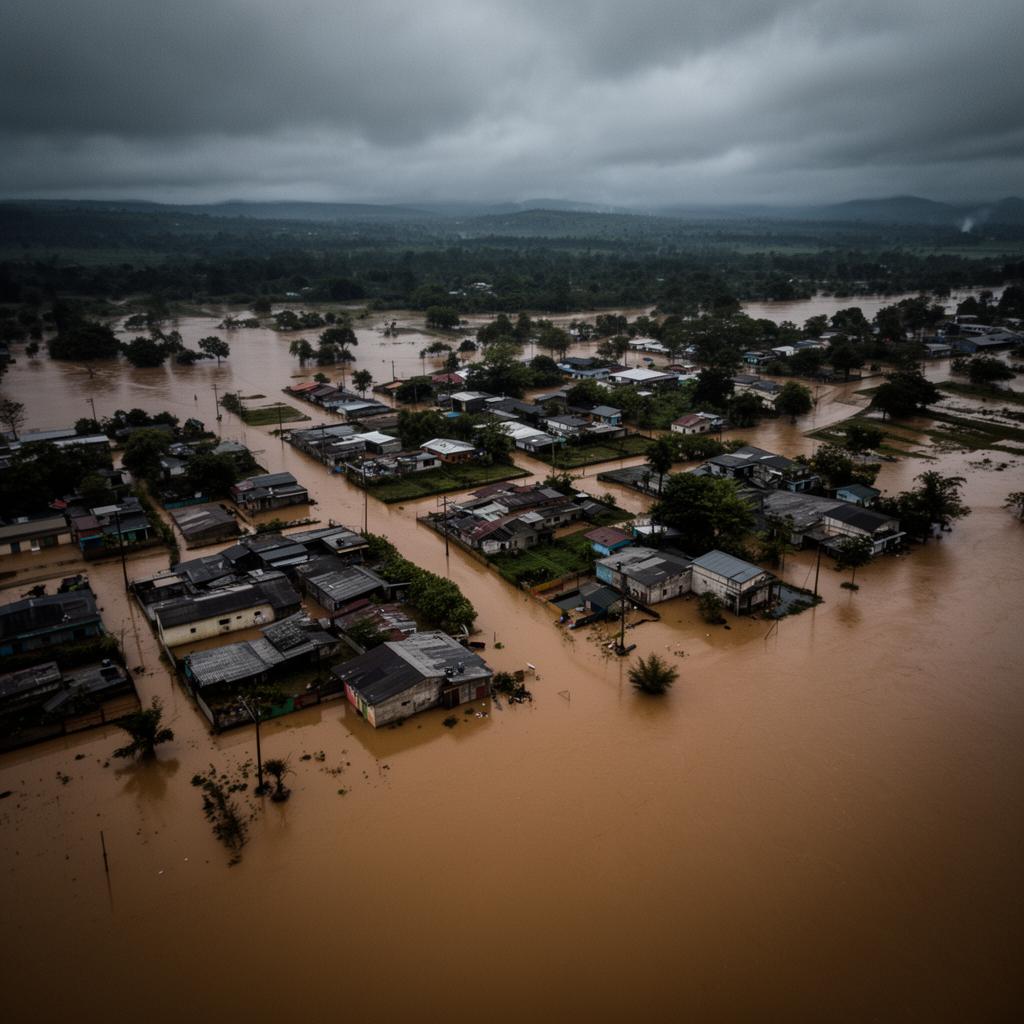
Two Camps in “Water”

The capital chasing “water” splits into two camps — the Romantics who try to make the resource itself investable, and the Pragmatists who treat water as a risk factor and quietly perform better.
The word “water” is doing far too much work in investment conversations. It stretches across a sprawling, incoherent territory — municipal utilities, desalination hardware, irrigation sensors, flood analytics, the wastewater business, and yes, the supermarket aisle selling bottled water at a 4,000% markup. These are not one market; they barely share a vocabulary. Yet capital flows toward all of them under a single feel-good banner, and that banner has produced two distinct camps that could not be further apart. Understanding the difference between them is the whole game.
Camp One: The Romantics (Main Street)
The larger, louder, more emotionally compelling camp is where Main Street money lives — retail investors, thematic ETFs, impact funds, generalist family offices, sustainability-mandated allocators, and the corporate-pledge crowd. Sincere, well-intentioned, and beautifully resourced. Its personas are familiar: the thematic ETF marketer with a child-and-water-glass hero image, the impact founder selling a “new water commodity,” the keynote futurist who opens with a supply-gap chart (demand outpacing supply by 40% by 2030, six billion people in high-stress regions), the CSO chasing a 2030 “water positive” target, and the “water crisis” campaigner whose entire frame is scarcity, Day Zero, and water bankruptcy.
You spot them by their slogans: “Water is life.” “Water is the new oil — blue gold.” “Water is the next great megatrend.” “Climate change is water change.” “Day Zero is coming.” “Clean water for all.” “Water is the biggest environmental challenge of our time.” Several deserve scrutiny. “Climate change is water change” has the cadence of insight but tells an investor nothing, collapsing flood, drought, a coastal port, a power plant, a disclosure rule, and a charity pledge into one undifferentiated phrase. And “the biggest environmental challenge of our time” falls apart the moment you look at how water actually harms people — they die from contaminated water, from the food that never grew because the water never came, from floods and storm surge. That is public health, food security, infrastructure, insurance, and the economy — not “environmental” in the way the word is usually deployed. The mislabeling is the entire reason the opportunity gets mispriced.
The keystone is “water is life,” and it is genuinely hard to argue with — unimpeachable precisely because it is so completely true. The moral clarity is intoxicating and the pitch writes itself: imagine if oil were absolutely essential for survival, couldn’t be substituted, and got harder to find every year — that is water, except there is no alternative. But here is the trap the whole camp falls into: importance and investability are not the same thing, and for water they are frequently inversely correlated. A resource can be utterly essential to survival and still be a terrible place to allocate capital — precisely because its essential nature is what gets it priced below cost, politically protected, and walled off from pricing power. Whatever thesis the romantics land on, we genuinely wish them well; the category needs capital, and conviction has a way of finding its own path.
The Romantic Mission — and the Mirage Beneath It
Their mission is to make water itself investable — to turn the resource, the molecule, the moral cause into an asset class and prove that doing well and doing good are the same trade. It is a noble mission and a mirage, because the slogans are doing the work that diligence should be doing. Five realities sit invisible beneath the fog. First, water isn’t fungible, so it isn’t a commodity — unlike oil or silver there is no genuine global market; its value is intensely local and it is too heavy and cheap to ship at scale. Second, it is deliberately underpriced for political reasons — the most politically captured commodity on earth, a recognized human right, priced below cost by design, with tariffs covering only about 70% of service costs. Third, the operators are structurally conservative — they run the most delicate system in the economy, where a failed experiment means contaminated water, and the first wave of “water-tech” mostly failed on regulatory-approval sales cycles measured in years. Fourth, making “new” water is a capital problem, not a software problem — desalination runs roughly $0.50–$2.50 per cubic meter before transport, exactly the profile disciplined capital should avoid. Fifth, voluntary demand is fragile — pledges can be quietly dropped, and letters of intent are not bankable offtake.
Camp Two: The Pragmatists (Educated Money)
The smaller, quieter, far-less-fun-at-dinner camp is made up of specialist funds and disciplined allocators across venture, growth, private equity, and infrastructure who have done the segment-by-segment work the word “water” obscures. Their defining move is to delete the word “water” from the thesis entirely and call the category hydroclimatic risk. The insight underneath: sectors describe what things are; risk factors describe what things do. Semiconductors and pharmaceuticals are sectors. Inflation, credit, duration, currency, and cyber are risk factors — pervasive forces that show up on every balance sheet, unevenly, with radically different consequences depending on the asset. Nobody claims to be “in the inflation industry.” Water belongs in that company: too much of it floods a port, too little idles a power plant, too dirty shuts an intake, too unpredictable breaks a twenty-year capex plan. Calling that a “sector” averages away the only information that matters.
So the pragmatists reframe water category by category into more investment-grade realms — where the multiples actually live. Water quality at the tap becomes a public-health problem (health-tech, not water-tech). Pricing flood, surge, and drought exposure into premiums becomes insur-tech. Stress-testing loan books under disclosure regimes becomes fin-tech. Hydroclimatic volatility as a physical-risk vector becomes climate-tech. Contamination and algal-bloom sensing becomes bio-tech. Their slogans, such as they are, give it away: “We don’t invest in water — we invest in the risk water creates.” “It’s not water-tech — it’s health-tech, insur-tech, fin-tech, climate-tech.” “Too much water is the trade.” That last one captures their most counterintuitive edge: the romantics fixate on scarcity — slow, chronic, politically priced — while the real venture- and PE-shaped opportunity is on the excess side. Flooding and storm surge are acute and event-driven, they land on private balance sheets that feel the pain immediately, secondary perils drive the majority of insured catastrophe losses, and the protection gap runs into the hundreds of billions — a screaming demand signal for exactly the software-margined products scarcity lacks.
Their overarching mission is not to make water investable but to back the unglamorous data and decision-support layer that helps existing buyers measure, manage, and price water-driven risk — the approach a fund like Mazarine Climate is built around. It sits deliberately outside the traditional water industry — no pipes, plants, or treatment — and outside the project of inventing a new water commodity. It targets non-discretionary spend by buyers already compelled to act: the finance, insurance, and real estate sector under ISSB / IFRS S2 disclosure and insurance repricing; linear-asset and coastal operators facing sea-level rise; power generators forecasting cooling-water availability. That demand is software-margined, ARR-shaped, and funded from risk and compliance budgets — growing roughly 16% annually toward $110B by 2030, separating a 16% market from the 3% utility market the “water industry” label averages together.
The VC/PE Layer: Specialist “Water” Funds
There is a small but growing band of dedicated venture and private-equity funds that brand themselves around water as their singular focus. The best are capable operators with real sector knowledge, and the archetype is consistent: a boutique fund founded by someone with a long water-industry career, writing early-stage checks across treatment, reuse, metering, monitoring, novel supply, and digital tooling. They tend to position the sector’s defining difficulties — slow procurement, entrenched incumbents, conservative buyers — not as risks to underwrite but as durable advantages, and their narrative leans squarely into the romantic canon. The LPs they attract are, overwhelmingly, the mission-and-impact crowd buying exposure to the cause, and the “water is life” framing is precisely what makes the raise possible. It becomes a self-reinforcing loop: the romantic thesis attracts romantic capital, the capital rewards the romantic pitch, and the whole apparatus stays anchored to the slow, procurement-driven core of “water.” None of this is bad-faith, and much of it does genuine good — but structurally it is Camp One wearing venture clothing.
A Word on the Referees: Media, Research, and Consulting
Sitting above both camps is a third group that shapes how everyone else sees the field — the water-intelligence layer of subscription research houses, data-platform vendors, trade journals, summit organizers, and award-givers. They are genuinely useful and often rigorous, and the better ones have pushed well beyond the traditional core. But it is worth knowing where their center of gravity sits. Their coverage maps, flagship datasets, glittering summits, and “company of the year” awards are anchored in the utility-and-infrastructure world — drinking water, wastewater, desalination, reuse — because that is who subscribes and sponsors. When an investor takes their market sizing at face value, they inherit the framing: water-as-sector, denominated in infrastructure capex, which blends the slow market into the fast one and obscures where venture- and PE-grade returns actually sit. Read them for the facts; supply your own frame.
The Strongest Objections — and Why the Frame Survives Them
A two-camp story is clean, and clean stories invite suspicion, so it is worth steelmanning the two best arguments against it. Objection one: it’s not two camps but a spectrum, and the biggest pool of capital has been ignored. Fair — drawn honestly, the field has at least three more constituencies. The largest is the infrastructure / yield investor buying regulated water utilities for inflation-linked, bond-like cash flows; there is also the strategic / corporate operator deploying capital for operational continuity, and the public / blended-finance camp treating return as a constraint rather than a goal. Slice it finely and you get five camps, not two. We are comfortable with that. The binary is not a claim that nothing else exists; it is a claim about our corner — early-to-growth capital seeking venture- and PE-scale returns — where the romantic / pragmatist split is the distinction that actually changes what you buy. Objection two: “water is just water,” and the segmentation is an investor’s convenient fiction. This is the serious one. The “one water” argument holds that potable, waste, storm, surface, and ground water are one interconnected system; nature does not respect our taxonomy. True — but a coupled system does not imply a single investment. Inflation is also one phenomenon coursing through the entire economy, and nobody concludes you should buy “inflation” as a unified thing; you price its effects on specific exposed assets. “One water” is true hydrologically and useless allocationally. In fact the risk-factor framing is the one that honors the coupling — a risk factor is by definition cross-cutting — whereas “water sector” chops the cycle into product categories. The first describes the territory; the second is how you actually deploy capital across it.
Navigating the “Water” Playground
The single most useful thing an investor can internalize is that “water” is not a sector — it is a word so broad it is nearly meaningless without qualification. The wastewater business runs on utility economics and municipal procurement. The bottled-water aisle is branded consumer packaged goods. Flood analytics is software. Desalination is energy-intensive hardware. Irrigation sensing is industrial IoT. Water quality at the tap is public health. Anything labeled “water” demands careful evaluation of which segment, which buyer, which forcing function, and which economics actually apply — because the label tells you nothing and the slogans tell you less.
The honest conclusion is uncomfortable. Main Street money will keep plowing into Camp One, because “water is life” feels good, photographs beautifully, and is wonderful to say at dinner — chasing desalination cost curves and supply-gap charts into the hardest, most politically captured, most capital-intensive corner of the category. Camp Two will quietly perform better, its returns underwritten by regulation, public-health imperatives, and balance sheets rather than sentiment — but it will remain the less sexy trade, because “hydroclimatic risk disclosure compliance tooling” will never fit on a bumper sticker. The pragmatist’s edge is, in part, exactly that unsexiness: it keeps the romantic crowd, and the capital that follows them, looking the other way. Water is not a sector. It is a factor. Once you see it that way, you cannot unsee it.