
We Skipped WEFTEC. We Went to Seattle.
Why a hydroclimatic risk investor went to the Global eDNA Conference.
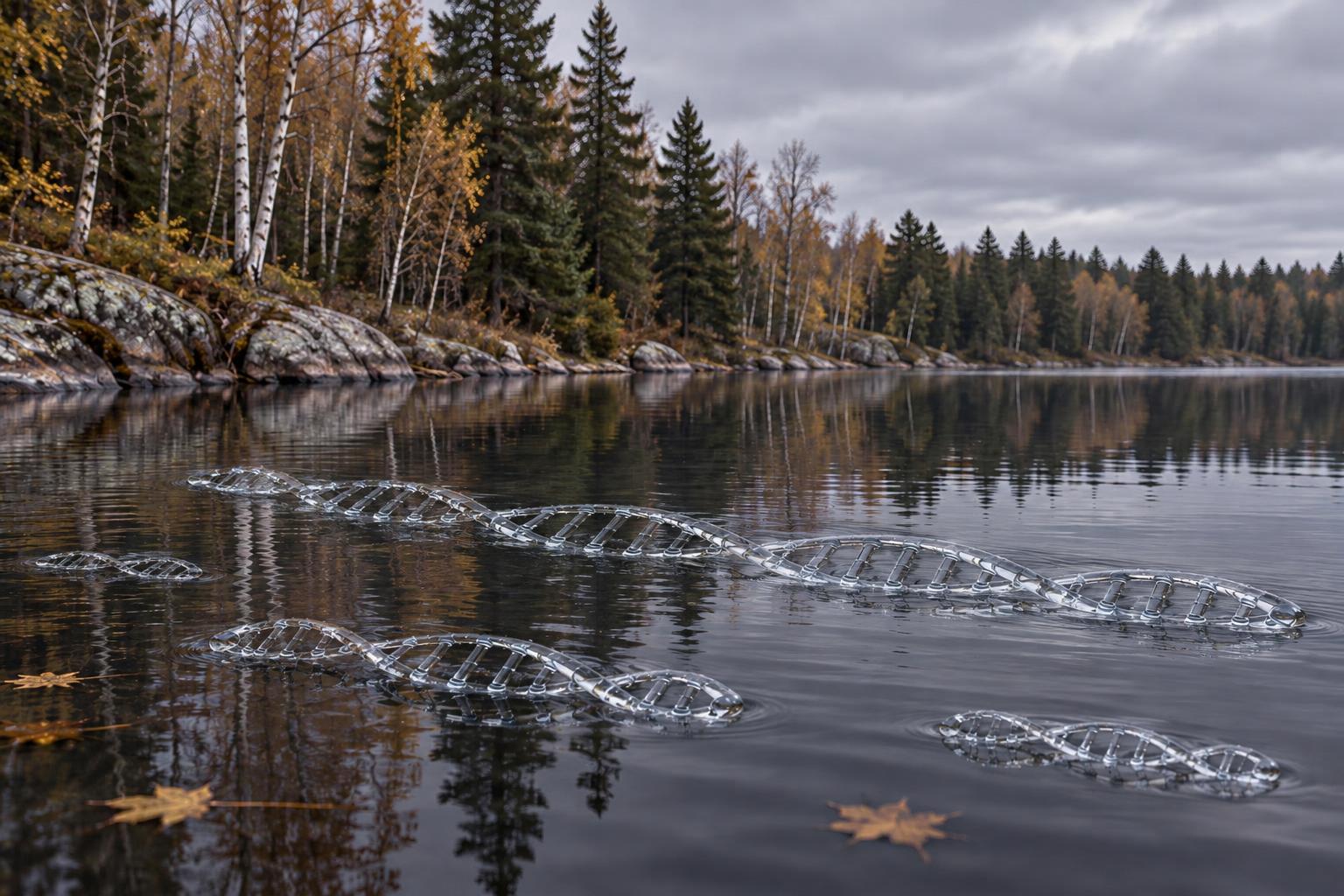
Water is a risk factor, not a sector. Last week, the risk was biological.
Last week we were in Seattle at the Global eDNA Conference instead of WEFTEC. WEFTEC is where the water industry meets to talk about utilities, treatment, and the trillion-dollar cost of rebuilding the pipes. Seattle was about salmon, kelp, plankton and invasive mussels. We went because we don't invest in water. We invest in what it threatens. When a river, reservoir or estuary changes, the cost rarely lands on a utility.
The buyer isn't a utility
Most water conversations start with the utility and end at its rate case. The exposure we care about sits on other balance sheets: the hydro operator whose license depends on a fish study, the power plant whose intake clogs, the pipeline that crosses a protected stream, the port dredging an estuary, the lender asked what nature risk sits in its book. None of them is in the water business, and all of them pay when the water changes. Too much water, too little, impaired water: when the impairment is biological, such as a toxic bloom, an invasive mussel or a missing fish, it lands on their operating budgets.
Every buyer has a budget line, and a deadline
Every thesis we look at has to trace a hazard to a buyer, a budget line and a product. eDNA meets that test in five places:
Power generation. Relicensing requires fish and habitat studies, and 281 US hydropower licenses expire by 2030. eDNA does much of that survey work at a fraction of the cost.
Intakes and cooling. Invasive zebra and quagga mussels foul intakes and land on the operator's O&M line. Columbia Basin dams face an estimated several hundred million dollars a year if the mussels arrive. eDNA detects them before they settle.
Linear assets. Every pipeline, road or rail crossing over a stream triggers a protected-species survey. A filter replaces a seasonal field crew.
Coastal infrastructure. Dredging, outfalls and offshore wind need biological baselines before permitting and after construction.
F.I.RE. Lenders and insurers face nature-related disclosure under TNFD and CSRD. Measured exposure replaces estimated exposure.
None of these budgets is discretionary, and none waits on a rate case.
Unmeasured risk doesn't get priced; it gets absorbed
Flood shows how this plays out. In 2025, about half of the roughly $224 billion in natural-catastrophe losses was uninsured. Floods, severe storms and wildfire alone caused $166 billion, against a 30-year average of $90 billion. The hazards that are hardest to measure at the asset level stay uninsured. The Northeast China floods cost $5.8 billion, and less than $0.5 billion of that was insured. Flood has decades of models, gauges and satellites behind it, and it is still only half priced. The living part of water has almost none of that, so it is barely priced at all. That gap is the opportunity.
The value is in decision-grade data, not cheap samples
The science works. Filter a liter of water, sequence it, and you get a census of the fish, mussels, amphibians, algae and microbes upstream. eRNA goes further: it shows what is active right now, including whether a bloom is producing toxins. Sampling is cheap and sequencing costs keep falling, so Seattle came for standardization, not detection. The sponsors included NOAA Research, the Office of Naval Research, and offshore energy's IOGP JIP34 genomics project. The hard part is the gap between what buyers think they bought and what they got. One lab leader told us the real work is matching the sampling effort and sequencing method to the question being asked, then being honest about what the method can show. A buyer who "did eDNA" on a lake last summer does not have eRNA-grade insight.
We don't back labs competing on price per sample. We back the layers that turn a sample into a decision:
Autonomous samplers that replace a crew in a boat.
Data infrastructure that keeps a 2026 reading comparable in 2031.
Products that turn a detection into an intake alert, a survey ready for a permit filing, or an input to underwriting.
These are opex products sold to enterprises, with recurring data revenue and none of the rate-case cycle.
The cost and the loss
The water industry's number is what it costs to rebuild the pipes. That cost is real, and someone has to pay it. Our number is different: what everyone else loses when a body of water changes, and what they need to know first.
Sometimes the answer is a flood forecast. Sometimes it's a liter of river water and a sequencer. Everyone else invests in water. We invest in what it threatens.
Sources
- Global eDNA Conference program and sponsors (MTS) · Hydro relicensing by 2030 (NHA) · Invasive mussel costs (NW Power & Conservation Council) · Natural disaster figures 2025 (Munich Re)
Mazarine Climate maintains a database of early-stage companies with technology innovations dedicated to helping their customers manage hydroclimatic risk.