
The Ocean Has No Balance Sheet
Ocean data is useful. Useful isn't the same as investable. Climate adaptation capital belongs where hydroclimatic risk comes ashore.
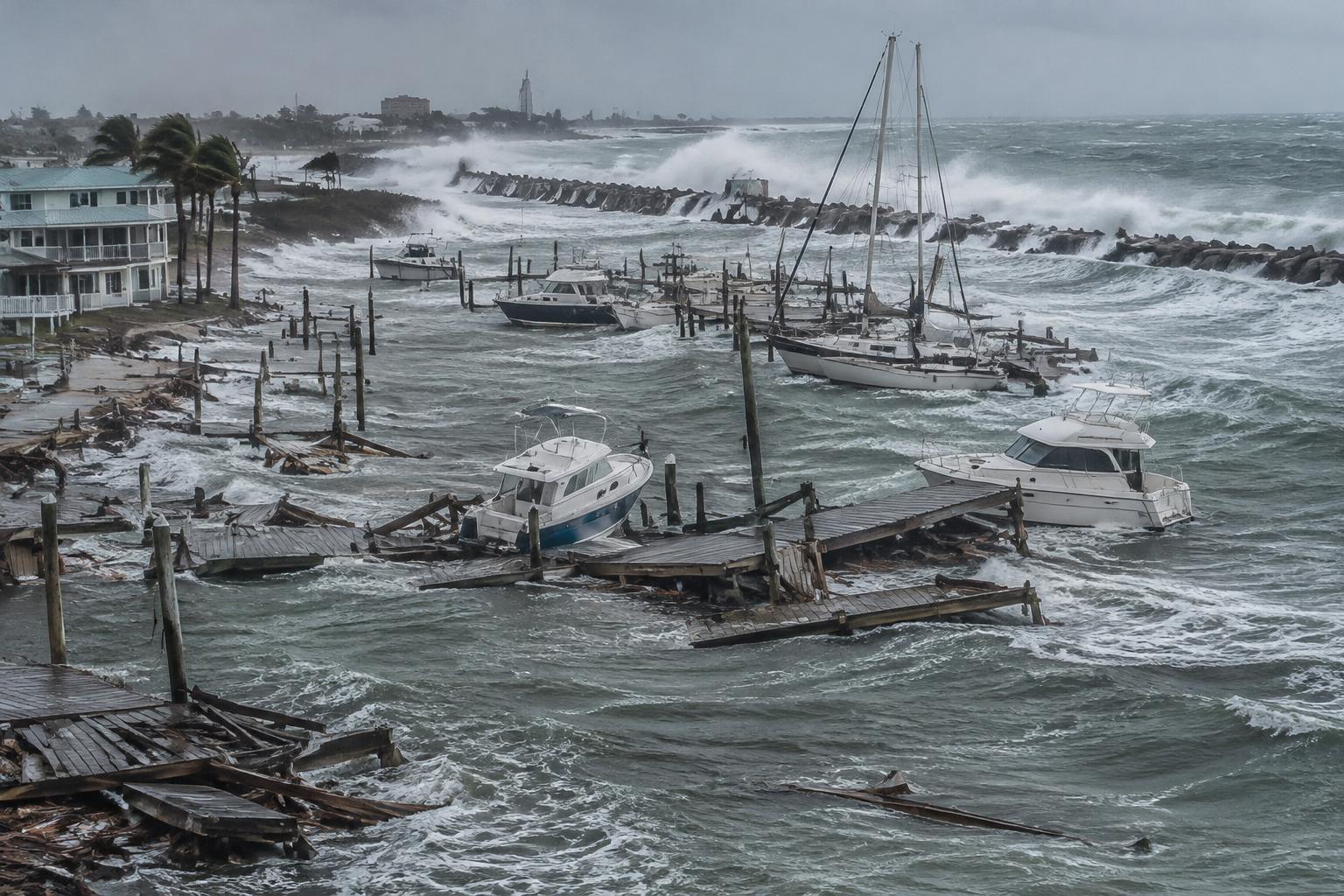
Funds focused on the ocean are missing the biggest opportunity in it: the place where the ocean meets the land. "Blue economy" describes a geography, not a market. It groups fisheries, shipping, tourism, conservation and offshore energy because they share a location. The money in ocean risk isn't spread evenly across that geography. It concentrates at the edge, where the sea reaches something someone owns.
The ocean needs protecting, and understanding it matters. It has never had the dense, continuous observation the atmosphere has had for decades, and the teams closing that gap are doing important work. But most of the value of that understanding is realized where the ocean meets the land. That includes the assets on land beside the water and the first mile or so of sea in front of them. We call this coastal infrastructure. It covers ports and terminals, coastal industry and real estate, intakes, outfalls and cable landings, and the nearshore waters they depend on.
Useful data still needs a buyer
Ask who owns the middle of the ocean and the answer is no one. There is no title deed, no insured asset, no loan and no permit. When an ocean measurement improves a forecast, the value spreads to everyone who uses that forecast. That is why ocean and weather observation has always been funded mostly by governments and navies. This isn't a criticism of the science. It is what a public good looks like. The commercial case is real but indirect. The value reaches shipping, energy, commodities and insurance only after passing through someone else's model, and the company that collected the data rarely captures it.
At the coast, hydroclimatic risk gets an owner
Every exposure on the coast belongs to someone. Port operators, industrial site owners, property owners, and the insurers and lenders behind them hold named, financed assets in the path of surge, sea-level rise and erosion. Disclosure rules, insurance repricing and adaptation capex give each of them a budget line and a deadline. That is what turns hydroclimatic risk from something worth studying into something a buyer has to pay for.
Resolution is worth most where the loss lands
A basin-wide picture of ocean conditions is valuable to a forecaster. A balance sheet needs something narrower: inundation depth at this terminal, erosion at this site, surge at this substation. Nothing on a balance sheet is priced at the ocean average. The companies we back take observations, including ocean observations, and turn them into decisions about individual assets, sold to enterprises as software. That is climate adaptation with venture economics: compelled buyers, recurring operating budgets and products that don't need a fleet.
Two layers, two kinds of capital
The two layers work together. Better ocean observation makes coastal risk models sharper, and the teams building it may well supply data to the companies we back. But that work needs a different kind of capital: patient, comfortable with hardware, at ease with government buyers, and willing to see much of the value flow to the public. We respect that capital. It just isn't ours.
Others are measuring the ocean. We invest in who pays when it comes ashore.
Mazarine Climate maintains a database of early-stage companies with technology innovations dedicated to helping their customers manage hydroclimatic risk.