
Scarcity Has No Counterparty
The argument that water security is national security is right. It also explains why scarcity and new-water technology struggle to raise venture capital.
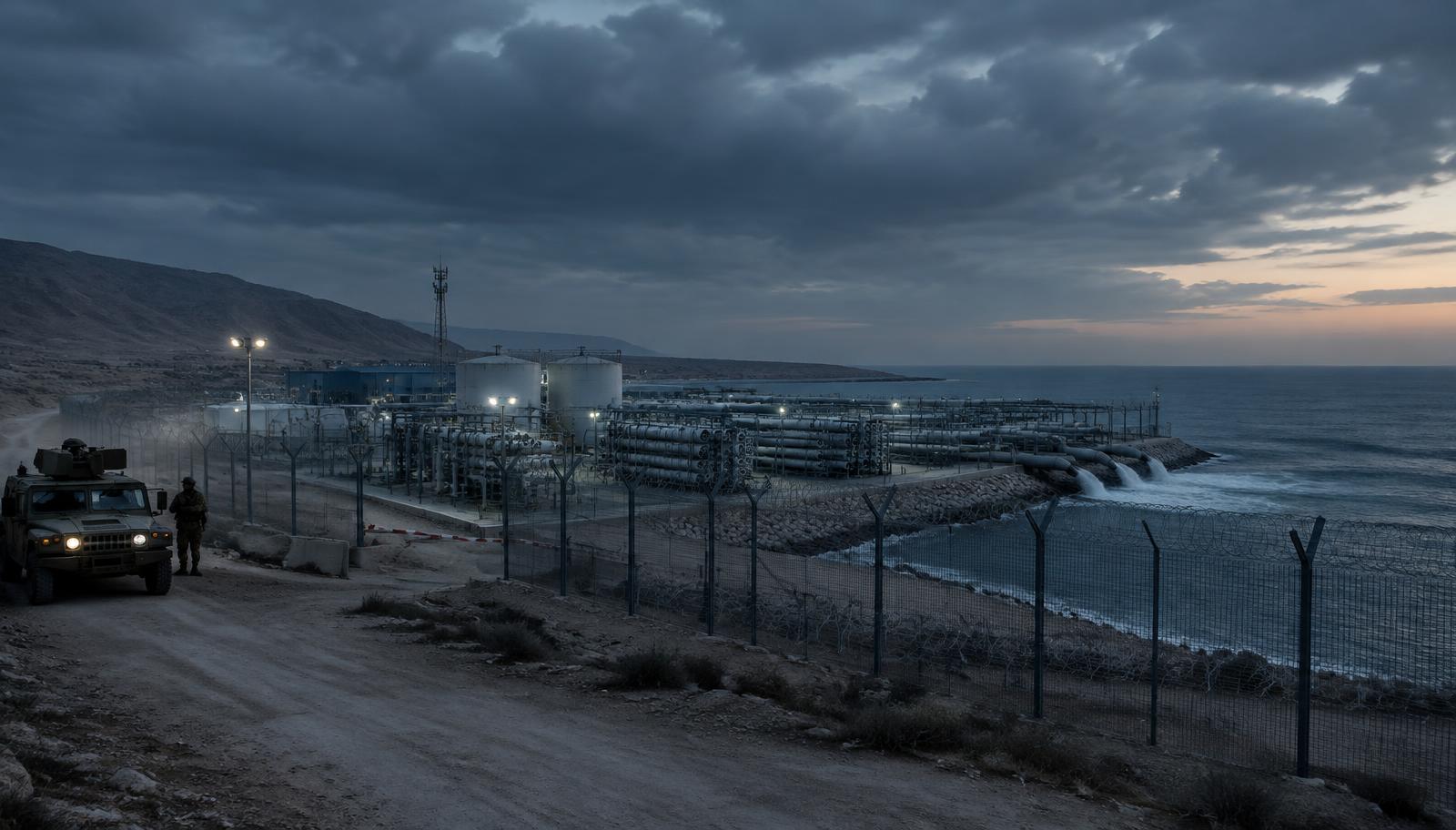
The water-as-national-security argument is having another moment, and its newest form is its strongest. Water is logistics: cut it and everything else stops within days. Adversaries already target it, through power grids that run the pumps, coastal desalination plants and pump stations in Gaza and Sudan. Centralized systems are single points of failure, so the proposed answer is to disperse production and make water at the point of use, from the air if necessary. Each step holds up. Yet thirty years after the first "water wars" warnings, the argument still moves readers more than it moves capital. Read closely, the case itself explains why.
The evidence names the missing buyer.
The strongest passages concede the problem. Governments lack the capital to build or repair the systems their people need. Across much of Africa, the shortfall is not water but the capital and governance to treat and deliver it. Texas's planned desalination plants remain unbuilt, and the reason is not missing technology. It is that no one has been willing to carry the cost. A threat assessment can be accurate and still have no one on the other side of the invoice. Scarcity describes a need, and venture capital underwrites a buyer.
War is the one loss nobody prices.
Strikes on grids, dams and desalination plants cause real losses, and standard property policies exclude war. When a basin edges toward conflict, no insurer reprices a book and no lender tightens a covenant. That leaves defence budgets as the only compelled buyer. Defence buys through appropriations and procurement cycles, not adoption curves. The national-security frame raises the urgency and shrinks the market.
Dispersion is a premium, and the premium is paid in energy.
Decentralization trades a single point of failure for a higher cost per litre. A forward base or a field hospital will pay that premium because the alternative is mission failure. A factory, a city or a data centre compares it against the tap. Pulling water from air takes roughly two orders of magnitude more energy per litre than seawater reverse osmosis. Pairing it with solar doesn't remove that energy cost; it just moves it into a larger array. The result is a real but niche hardware market (military, remote sites, disaster response), financed project by project. Large-scale desalination has the opposite problem: it works. That is exactly why it runs on 25-year offtake contracts and project finance rather than venture.
The investable line is buried in the middle.
One sentence carries more market than the rest of the case: European nuclear reactors had to cut output because rivers ran too low and too warm to cool them. That is not scarcity in the abstract. It is volatility on a generator's P&L, with a dated loss and an operator compelled to manage it. Data centres facing permitting fights over stressed aquifers have the same shape. When too little water shows up as a specific asset's lost output, it becomes priceable. The opportunity there is the forecasting and decision layer, not new litres.
The people building desalination plants and pulling water from the air are doing hard, necessary work, and much of it deserves funding. The right funders are sovereigns, defence, development finance and infrastructure capital, whose money matches the shape of the work. Water security is national security. That is exactly why it gets paid for like national security: by states, slowly, through budgets. Venture capital waits for the loss with a name on it.
Mazarine Climate maintains a database of early-stage companies with technology innovations dedicated to helping their customers manage hydroclimatic risk.